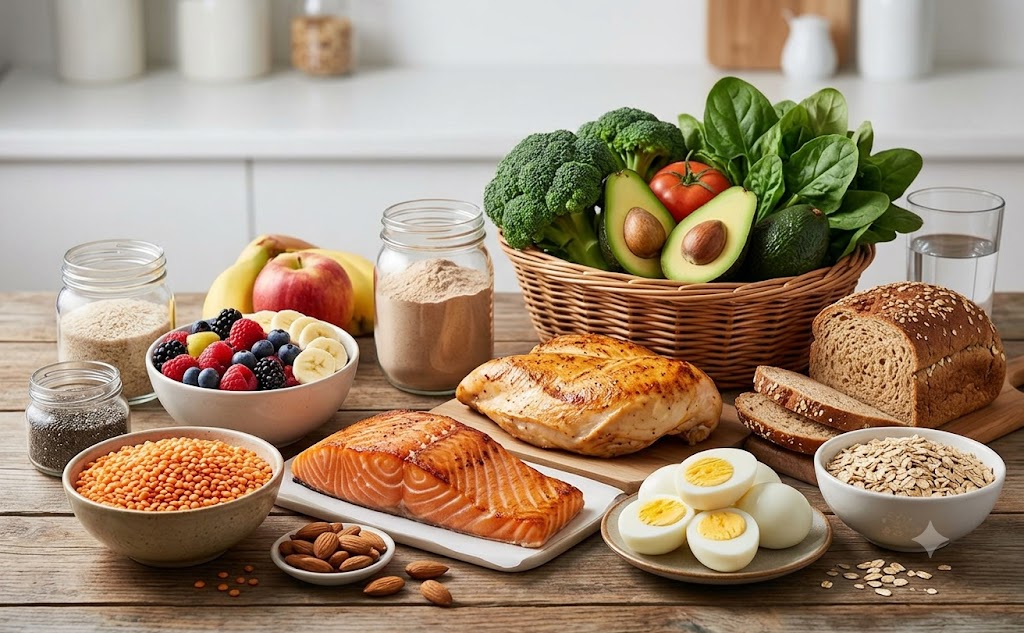

The new federal dietary guidelines 2026 have officially landed — and if you’ve been following nutrition news, you already know they’ve sparked more debate than almost any previous edition. Some of the changes are long overdue. Some are more cautious than the science warrants. And a few have genuinely surprised even veteran nutrition researchers.
But here’s the problem with dietary guidelines: they’re written in government language, buried in a 164-page document, and filtered through layers of political and industry influence before they reach the public. By the time most people hear about them, the nuance has been squeezed out and replaced with headlines that are either alarmist or completely misleading.
So let’s cut through all of that. Here’s a plain-English breakdown of what actually changed in the 2026 Dietary Guidelines for Americans, why it matters, and what you should actually do about it.
What Are the Dietary Guidelines for Americans — And Why Do They Matter?
The Dietary Guidelines for Americans are updated every 5 years by the U.S. Department of Agriculture (USDA) and the Department of Health and Human Services (HHS). They’re based on a comprehensive review of the current nutritional science conducted by an independent advisory committee.
These guidelines matter far beyond individual eating habits:
- They determine what gets served in school lunches across the country — affecting the diets of over 30 million children daily
- They shape federal nutrition assistance programs including SNAP, WIC, and the National School Lunch Program
- They influence food labeling regulations and what counts as a “healthy” food on packaging
- They guide clinical nutrition recommendations from doctors, dietitians, and health organizations
- They inform hospital food policies and nutrition standards in institutional settings
In short: the dietary guidelines aren’t just advice. They’re infrastructure. They shape the food environment that millions of Americans navigate every day, often without realizing it.
The 6 Most Significant Changes in the 2026 Guidelines

Change 1: Added Sugar Limit Tightened to 10% of Calories — With Stronger Language
The previous guidelines recommended limiting added sugar to less than 10% of daily calories. The 2026 edition keeps that threshold but adds significantly stronger language around the types of added sugar that are most harmful — specifically calling out sugar-sweetened beverages as a primary driver of metabolic disease and recommending they be minimized, not just moderated.
For a 2,000-calorie diet, 10% of calories from added sugar = 50 grams (about 12 teaspoons) per day. The average American currently consumes approximately 77 grams of added sugar daily — more than 50% above the recommended limit.
What this means for you: If you drink 1 can of regular soda per day, you’ve already consumed 39 grams of added sugar — nearly your entire daily allowance in a single drink.
Change 2: Sodium Recommendation Lowered to 2,300mg — With Age-Specific Guidance
The sodium recommendation remains at 2,300mg per day for adults — but the 2026 guidelines introduce new age-specific guidance, recommending that adults over 51 and those with hypertension, diabetes, or chronic kidney disease aim for 1,500mg per day.
The average American consumes approximately 3,400mg of sodium daily — nearly 50% more than the standard recommendation. Ultra-processed foods account for approximately 70% of dietary sodium intake.
What this means for you: Cooking more meals at home and reducing ultra-processed food consumption is the single most effective way to bring sodium intake into the recommended range.
Change 3: Saturated Fat Guidance Refined — Not All Saturated Fats Are Equal
Previous guidelines recommended limiting saturated fat to less than 10% of calories without distinction between food sources. The 2026 edition introduces more nuance — acknowledging that the cardiovascular effects of saturated fat appear to differ significantly depending on the food source.
Specifically, the guidelines note that saturated fat from whole food sources like dairy, eggs, and unprocessed meat appears to carry different cardiovascular risk than saturated fat from ultra-processed foods and tropical oils (palm oil, coconut oil in large amounts).
This is a significant shift that aligns with more recent nutritional science — and it’s likely to reduce the demonization of foods like whole milk, cheese, and eggs that previous guidelines somewhat oversimplified.
What this means for you: Focus less on avoiding all saturated fat and more on minimizing saturated fat from ultra-processed sources.
Change 4: Plant-Forward Eating Emphasized More Strongly Than Ever
Every edition of the dietary guidelines has nudged Americans toward more plant-based eating. The 2026 edition does so more explicitly than any previous version — recommending that vegetables, fruits, whole grains, legumes, nuts, and seeds form the foundation of the diet, with animal products serving a supporting rather than central role.
This doesn’t mean the guidelines recommend vegetarianism or veganism — they explicitly acknowledge that healthy dietary patterns can include meat, poultry, seafood, dairy, and eggs. But the emphasis on plant foods has never been stronger.
What this means for you: Aim to fill at least half your plate with vegetables and fruits at every meal, and make legumes and whole grains regular staples rather than occasional additions.
Change 5: Alcohol Guidance Significantly Tightened
This is arguably the most controversial change in the 2026 guidelines. Previous editions recommended no more than 1 drink per day for women and 2 for men. The 2026 guidelines reduce this to 1 drink per day maximum for both men and women — and include new language noting that no amount of alcohol is completely without health risk.
This shift reflects the accumulating evidence that even moderate alcohol consumption is associated with increased cancer risk — particularly breast cancer — that previous guidelines had not fully incorporated.
What this means for you: If you drink alcohol, the science increasingly suggests less is better. If you don’t drink, there’s no health reason to start.
Change 6: Ultra-Processed Foods Explicitly Called Out for the First Time
In a significant departure from previous editions, the 2026 guidelines explicitly name ultra-processed foods as a category to limit — rather than just referring to nutrients like sodium, sugar, and saturated fat in isolation.
This is a meaningful conceptual shift. It moves the guidance from a nutrient-focused framework toward a food-pattern framework — acknowledging that the health effects of ultra-processed foods go beyond their individual nutrient profiles and reflect something about the nature of industrial food processing itself.
What this means for you: If a food has more than 5 ingredients and contains additives you don’t recognize, it’s probably the kind of food the guidelines are now explicitly telling you to minimize.
What Didn’t Change — And Why That Matters
Not everything shifted. Here are the core recommendations that remain consistent:
- Fruits and vegetables: Aim for 2.5 cups of vegetables and 2 cups of fruit per day — a recommendation that has stayed essentially constant for decades, and one that less than 10% of Americans actually meet
- Whole grains: Make at least half your grains whole grains — still widely ignored, with most Americans eating predominantly refined grains
- Seafood: Aim for at least 2 servings of seafood per week — unchanged and still significantly under-consumed
- Variety: No single food or food group is sufficient — dietary variety remains the cornerstone of all editions
The consistency of these core recommendations across multiple decades is itself meaningful. The science on fruits, vegetables, whole grains, and seafood is not in dispute. The challenge has never been knowing what to eat — it’s doing it.
The Politics of Dietary Guidelines — What You Should Know
No discussion of the dietary guidelines is complete without acknowledging their limitations. The guidelines are developed through a political process that involves significant input from food industry lobbyists — and the history of guidelines is littered with examples of industry influence delaying or softening recommendations that the science supported.
The most striking example: despite overwhelming evidence linking ultra-processed food consumption to disease, it took until 2026 — decades after the NOVA classification was established — for the guidelines to explicitly name ultra-processed foods as a category to limit.
Does this mean the guidelines are worthless? No. They still represent the best synthesis of mainstream nutritional science available. But it does mean they should be understood as a floor, not a ceiling — the minimum that political consensus will allow, not necessarily the optimal dietary pattern that the evidence supports.
A Simple One-Week Eating Plan Based on the 2026 Guidelines
You don’t need to memorize 164 pages. Here’s what following the 2026 guidelines actually looks like in practice:
Breakfast options:
- Oatmeal with berries, nuts, and a side of eggs
- Greek yogurt with chia seeds and fresh fruit
- Whole grain toast with avocado and a poached egg
Lunch options:
- Large salad with mixed greens, legumes, vegetables, olive oil, and grilled fish or chicken
- Lentil soup with whole grain bread
- Bean and vegetable burrito bowl with brown rice
Dinner options:
- Baked salmon with roasted vegetables and quinoa
- Stir-fry with tofu, vegetables, and brown rice
- Chicken with sweet potato and steamed broccoli
Snack options:
- Fresh fruit with a small handful of nuts
- Hummus with sliced vegetables
- Plain Greek yogurt
What to minimize:
- Sugary drinks of all kinds
- Ultra-processed snacks and packaged foods
- Processed meats
- Alcohol
Frequently Asked Questions (FAQ)
Q: When were the new dietary guidelines released? A: The 2026 Dietary Guidelines for Americans were released in early 2026 by the USDA and HHS, following review by the 2025 Dietary Guidelines Advisory Committee.
Q: Do the new dietary guidelines recommend a plant-based diet? A: The guidelines strongly emphasize plant-forward eating but do not mandate a vegetarian or vegan diet. They explicitly acknowledge that healthy dietary patterns can include animal products — the emphasis is on making plants the foundation rather than a side note.
Q: How much has the alcohol recommendation changed? A: The maximum recommendation has been reduced from 2 drinks per day for men to 1 drink per day — matching the previous limit for women. The guidelines also note for the first time that no amount of alcohol is completely risk-free.
Q: Why do the dietary guidelines change every 5 years? A: Nutritional science evolves. New research emerges, analytical methods improve, and understanding of diet-disease relationships deepens. The 5-year review cycle allows guidelines to incorporate new evidence while maintaining enough stability for policy and institutional implementation.
Q: Are the dietary guidelines the same as the food pyramid? A: The food pyramid was a visual representation of earlier dietary guidelines and was replaced by MyPlate in 2011. The underlying guidelines themselves are the primary document — MyPlate is just one simplified visual communication tool.
Q: Do the dietary guidelines apply to children? A: Yes — the 2026 guidelines include specific recommendations for different life stages, including infants, toddlers, children, adolescents, pregnant women, and older adults. Children’s recommendations differ from adult recommendations in several important ways.
The Bottom Line
The new federal dietary guidelines 2026 represent the most science-aligned edition in years — with stronger language on ultra-processed foods, tightened alcohol guidance, refined saturated fat recommendations, and the clearest plant-forward emphasis to date.
But guidelines don’t change health. Behavior does. And the gap between what the guidelines recommend and what most Americans actually eat remains enormous — particularly on vegetables, fruits, whole grains, and added sugar.
The good news: you don’t need to follow every guideline perfectly to dramatically improve your health. Start with the biggest levers — cut sugary drinks, reduce ultra-processed food, add more vegetables, and eat more legumes. Those 4 changes alone would move most Americans dramatically closer to what the evidence says is a health-protective diet.
The guidelines are a road map. The journey is yours to take.