Gut bacteria serotonin IBS research just took a major leap forward — and the discovery could fundamentally reshape how one of the world’s most common digestive conditions is understood and treated.
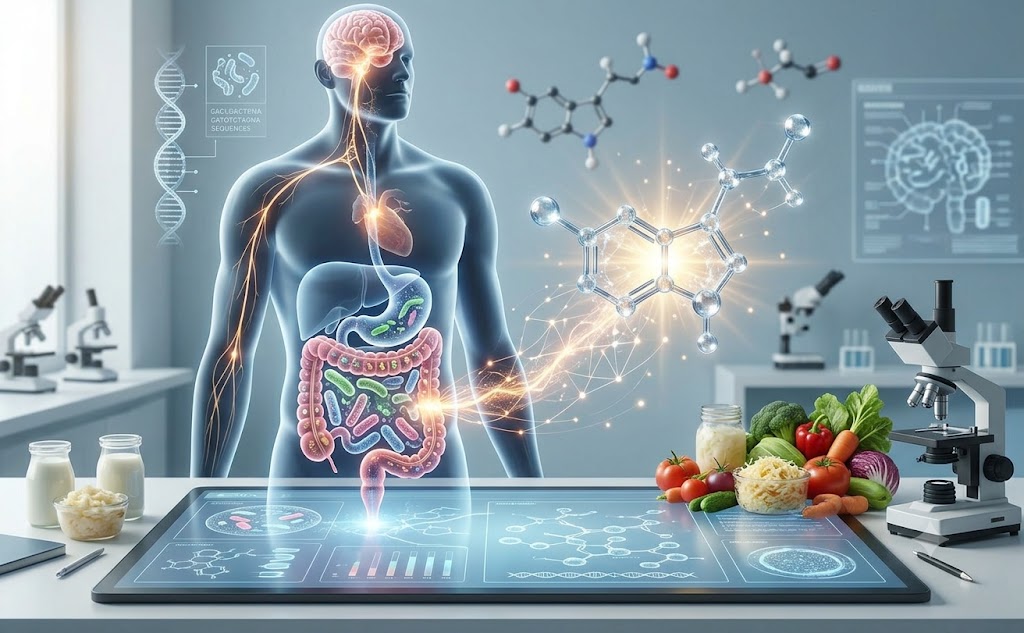
Researchers have identified 2 specific gut bacteria capable of producing serotonin — the neurotransmitter most people associate with mood and happiness, but which actually plays a critical role in regulating bowel function. The finding opens a genuinely new therapeutic direction for the estimated 10–15% of the global population living with irritable bowel syndrome (IBS) — a condition that has frustrated both patients and doctors for decades with its complexity and resistance to treatment.
Here’s what the science says, what it means for IBS sufferers, and what you can do right now to support the gut bacteria responsible for keeping your digestive system running smoothly.
What Researchers Discovered
The study, published in a leading gastroenterology journal, used advanced microbiome sequencing technology to analyze gut bacteria samples from a large cohort of participants — both those with IBS and healthy controls.
The key findings:
- Researchers identified 2 bacterial strains — from the Enterococcus and Lactobacillus genera — that are capable of producing serotonin directly in the gut
- IBS patients showed significantly lower levels of these serotonin-producing bacteria compared to healthy controls
- The reduction in serotonin-producing bacteria was correlated with altered gut motility — the rate at which food moves through the digestive system — which is the primary driver of IBS symptoms
- Restoring these bacterial populations in animal models normalized gut motility and reduced IBS-like symptoms
- The researchers proposed that targeting these specific bacteria — through diet, probiotics, or precision microbiome therapies — could represent a new therapeutic approach to IBS treatment
This is significant because it provides a specific, mechanistic explanation for something IBS researchers have long suspected: that the gut microbiome plays a direct causal role in IBS symptoms — not just a correlational one.
Why Serotonin in the Gut Matters So Much
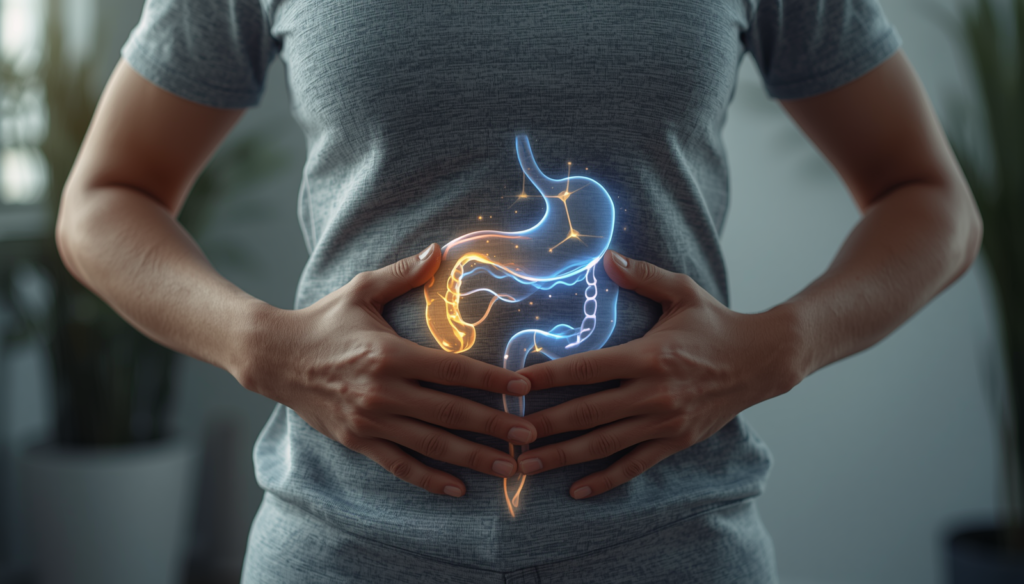
Most people think of serotonin as a brain chemical — the “feel-good neurotransmitter” that antidepressants work on. But here’s a fact that surprises almost everyone: approximately 95% of the body’s serotonin is produced in the gut — not the brain.
In the digestive system, serotonin plays a completely different set of roles from its brain functions:
Regulating gut motility: Serotonin signals the enteric nervous system — the “second brain” embedded in the gut wall — to coordinate the muscle contractions that move food through the digestive tract. Too little serotonin? Things slow down → constipation. Too much serotonin? Things speed up → diarrhea.
Coordinating the gut-brain axis: Serotonin produced in the gut communicates with the brain via the vagus nerve, influencing mood, appetite, and stress responses in ways that researchers are still mapping.
Regulating pain sensitivity: Serotonin modulates pain signaling in the gut. Abnormal serotonin levels are associated with visceral hypersensitivity — the amplified gut pain response that is 1 of the hallmark features of IBS.
Controlling secretion: Serotonin regulates the secretion of digestive fluids and the permeability of the intestinal lining — both of which are disrupted in IBS.
Given all of this, the discovery that specific gut bacteria are responsible for a significant portion of gut serotonin production — and that IBS patients have fewer of these bacteria — is a major piece of the IBS puzzle falling into place.
What Is IBS — And Why Is It So Hard to Treat?
Irritable bowel syndrome is a functional gastrointestinal disorder — meaning it involves abnormal gut function without structural damage that shows up on imaging or standard tests. This has historically made it both difficult to diagnose and difficult to treat.
IBS affects an estimated 10–15% of people globally — making it one of the most common gastrointestinal conditions worldwide. It’s characterized by:
- Recurring abdominal pain or cramping
- Altered bowel habits — diarrhea (IBS-D), constipation (IBS-C), or alternating between both (IBS-M)
- Bloating and gas
- Mucus in stool
- Urgency and incomplete evacuation
IBS is not life-threatening — but it is life-altering. Studies consistently show that IBS significantly impairs quality of life, affecting work productivity, social functioning, sleep, mental health, and overall wellbeing. Many IBS sufferers describe the condition as one of the most disruptive chronic health challenges they face.
Treatment has historically been frustratingly limited:
- Dietary modification (low-FODMAP diet, fiber adjustments) helps many but not all patients
- Antispasmodics and antidiarrheals provide symptomatic relief but don’t address underlying mechanisms
- Low-dose antidepressants improve symptoms in some patients — likely through their effects on serotonin signaling
- Gut-directed hypnotherapy and CBT show genuine efficacy but are not widely accessible
The serotonin-producing bacteria discovery suggests a new, more targeted therapeutic avenue — one that addresses the microbiome-serotonin-motility pathway directly.
The Gut-Brain Axis: Why Your Gut Health Affects Your Mood (and Vice Versa)
The discovery of gut bacteria producing serotonin is part of a larger revolution in understanding the gut-brain axis — the bidirectional communication network between the digestive system and the brain.
Here’s how deeply connected these 2 systems are:
- The gut contains approximately 500 million neurons — more than the spinal cord — forming what scientists call the “enteric nervous system” or “second brain”
- The gut and brain communicate via the vagus nerve, gut-produced hormones and neurotransmitters, and the immune system
- 70% of the immune system resides in the gut — making gut health a primary determinant of systemic immune function
- Gut microbiome composition directly influences production of GABA, dopamine, and serotonin — neurotransmitters central to mood, anxiety, and emotional regulation
- People with IBS have significantly higher rates of anxiety and depression — and this isn’t purely because IBS is distressing. The gut-brain axis runs in both directions, meaning poor gut health drives poor mental health, and vice versa
Understanding IBS as a gut-brain axis disorder — rather than purely a digestive one — is one of the most important conceptual shifts in gastroenterology in recent years.
8 Ways to Support Your Serotonin-Producing Gut Bacteria Right Now
While the specific therapeutic applications of this research are still in development, there is already strong evidence for several dietary and lifestyle strategies that support the serotonin-producing gut bacteria identified in the study — and gut microbiome health more broadly.
1. Eat More Fermented Foods
Fermented foods are the most direct dietary source of beneficial gut bacteria. Yogurt, kefir, kimchi, sauerkraut, miso, and kombucha all introduce live beneficial bacteria into the gut — including Lactobacillus strains closely related to the serotonin-producing bacteria identified in the research.
A 2021 Stanford study found that eating 6 servings of fermented foods per day for 10 weeks significantly increased microbiome diversity and reduced markers of inflammation.
2. Maximize Dietary Fiber
Fiber is the primary food source for gut bacteria. Without adequate fiber, beneficial bacterial populations — including serotonin producers — decline. Aim for 35–50g of fiber per day from diverse plant sources: vegetables, fruits, legumes, whole grains, nuts, and seeds.
3. Eat the Rainbow
Microbiome diversity is strongly correlated with dietary diversity. Eating 30 or more different plant foods per week — a target promoted by the American Gut Project — is associated with significantly greater gut microbiome diversity and better gut health outcomes.
4. Minimize Ultra-Processed Foods
Ultra-processed foods — through their emulsifiers, artificial additives, and refined ingredients — are documented disruptors of the gut microbiome. They reduce beneficial bacterial diversity and promote the growth of inflammatory bacterial strains. This is 1 of the most direct dietary changes you can make to protect gut bacteria populations.
5. Consider a Targeted Probiotic
Lactobacillus species — closely related to the serotonin-producing bacteria in the study — are among the most well-researched probiotic strains for IBS. Multiple clinical trials show that specific Lactobacillus and Bifidobacterium strains reduce IBS symptom severity. Look for products with documented clinical evidence for your specific IBS subtype.
6. Manage Stress Actively
Chronic stress directly disrupts the gut microbiome through cortisol’s effects on gut motility, intestinal permeability (“leaky gut”), and immune function. Stress management practices — exercise, breathwork, meditation, therapy — are legitimate gut health interventions, not just wellness extras.
7. Prioritize Sleep
The gut microbiome follows a circadian rhythm — gut bacterial populations fluctuate over a 24-hour cycle. Disrupted sleep disrupts this rhythm, negatively affecting microbiome composition and gut function. 7–9 hours of quality sleep per night is a genuine gut health investment.
8. Limit Unnecessary Antibiotic Use
Antibiotics are essential and life-saving when needed — but they also dramatically reduce gut microbiome diversity, often taking 6–12 months to partially recover. Avoid unnecessary antibiotic use, and when antibiotics are required, support recovery with probiotics and fermented foods.
Frequently Asked Questions (FAQ)
Q: What percentage of the body’s serotonin is made in the gut? A: Approximately 90–95% of the body’s total serotonin is produced in the gut — primarily by enterochromaffin cells in the intestinal lining, with gut bacteria playing a significant supporting role. Only 5–10% of serotonin is produced in the brain.
Q: Can improving gut bacteria help with IBS? A: Increasingly, yes. Multiple studies show that gut microbiome composition is significantly altered in IBS patients. Dietary interventions that improve microbiome health — particularly the low-FODMAP diet, high-fiber diets, and fermented foods — improve IBS symptoms in a meaningful proportion of patients.
Q: Are there specific probiotics that help with IBS? A: Several probiotic strains have demonstrated efficacy for IBS in clinical trials, including Lactobacillus plantarum 299v, Bifidobacterium infantis 35624, and multi-strain formulations. Results vary by IBS subtype (IBS-D vs IBS-C vs IBS-M) and individual microbiome composition. Consulting a gastroenterologist or dietitian for personalized recommendations is advisable.
Q: What is the low-FODMAP diet and does it help IBS? A: The low-FODMAP diet eliminates fermentable carbohydrates (certain sugars and fibers) that feed gas-producing gut bacteria. It reduces symptoms in approximately 70% of IBS patients in the short term. However, it is not intended as a permanent diet — the elimination phase should be followed by careful reintroduction to identify individual triggers.
Q: Does anxiety cause IBS, or does IBS cause anxiety? A: Both. The gut-brain axis runs bidirectionally — IBS symptoms trigger anxiety, and anxiety worsens IBS symptoms through cortisol’s effects on gut motility and sensitivity. Addressing both the gut and the mental health component produces better outcomes than treating either in isolation.
Q: When will treatments based on serotonin-producing gut bacteria be available? A: Clinical applications are likely 3–7 years away for most patients. The immediate next steps involve larger human trials to confirm the findings, followed by development of targeted probiotic formulations or microbiome therapies. In the meantime, dietary strategies to support Lactobacillus and Enterococcus populations are your best available tool.
The Bottom Line
The discovery of gut bacteria serotonin IBS connections represents 1 of the most exciting developments in gastroenterology in years. Identifying specific serotonin-producing gut bacteria — and finding that IBS patients have fewer of them — provides a mechanistic explanation for IBS that could finally lead to targeted, effective treatments.
We’re not there yet. But the research direction is clear, and the implications are enormous for the hundreds of millions of people worldwide whose lives are significantly disrupted by IBS.
In the meantime, the strategies for supporting your serotonin-producing gut bacteria are the same strategies that support overall gut health: diverse, fiber-rich, plant-forward eating; fermented foods; stress management; quality sleep; and minimizing ultra-processed food and unnecessary antibiotics.
Your gut is not just a digestive organ. It’s a neurochemical factory, an immune system headquarters, and a key player in your mental and physical health. Feed it accordingly.