Ultra-processed foods and heart attack risk are directly linked — and a landmark new U.S. study has just put a number on exactly how dangerous your daily snack habit might be.
The study, one of the largest of its kind, found that people who consumed the highest amounts of ultra-processed foods had a staggering 67% higher risk of heart attack and stroke compared to those who ate the least. Not a small bump in risk. Not a marginal difference. 67%.
And here’s the thing that makes this finding so alarming: ultra-processed foods now make up approximately 60% of the average American’s daily calorie intake. These aren’t exotic, hard-to-avoid ingredients. They’re the chips in your pantry, the frozen meals in your freezer, the breakfast cereal in your bowl, and the energy drink in your hand.
Let’s break down exactly what the research found, why these foods are so damaging, and — most importantly — what you can do about it.
What the Study Found
The study tracked dietary patterns and cardiovascular outcomes in tens of thousands of U.S. adults over an extended follow-up period, making it one of the most comprehensive analyses of ultra-processed food consumption and heart health ever conducted in an American population.
Key findings:
- People in the highest quartile of ultra-processed food consumption had a 67% higher risk of major cardiovascular events — including heart attack, stroke, and cardiovascular death — compared to those in the lowest quartile
- The risk increased in a clear dose-response pattern — the more ultra-processed food consumed, the higher the cardiovascular risk
- The association held even after controlling for overall calorie intake, body weight, smoking, physical activity, and other cardiovascular risk factors
- Sugary drinks were the single most dangerous category of ultra-processed food for cardiovascular outcomes
- Processed meats (hot dogs, deli meats, sausages) were the second most dangerous category
- Even “healthier” ultra-processed foods — like flavored yogurts, packaged granola bars, and certain breakfast cereals — showed measurable cardiovascular risk associations
The conclusion was unambiguous: ultra-processed food consumption is an independent risk factor for cardiovascular disease — meaning it raises your risk beyond what is explained by its effects on weight or other known risk factors.
What Exactly Are Ultra-Processed Foods?
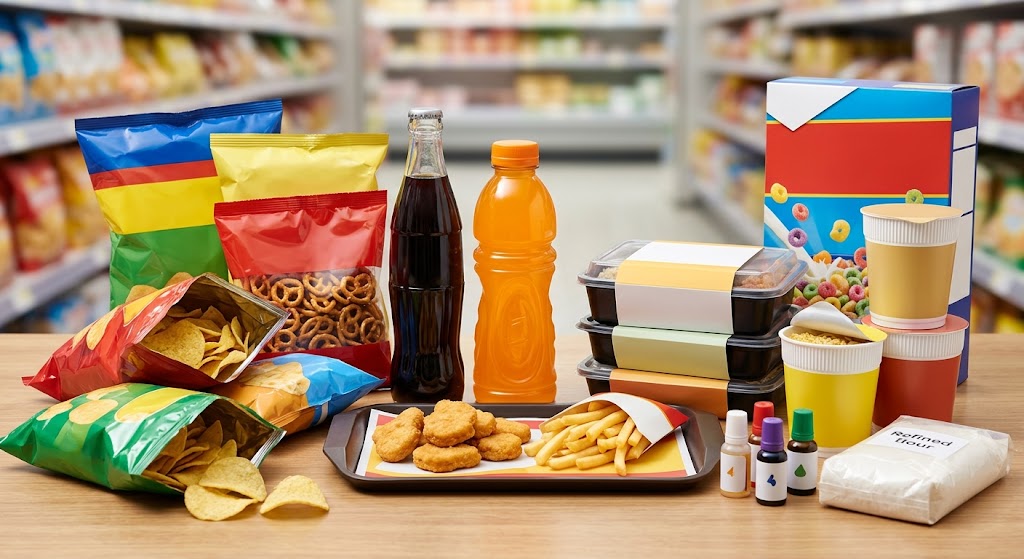
This is where a lot of people get confused — because “ultra-processed” isn’t just another way of saying “unhealthy.” It’s a specific classification system developed by Brazilian researcher Carlos Monteiro, known as the NOVA classification, that groups foods based on the degree and purpose of processing.
The 4 NOVA categories are:
| Category | Description | Examples |
|---|---|---|
| Group 1 | Unprocessed or minimally processed | Fresh fruits, vegetables, meat, eggs, milk |
| Group 2 | Processed culinary ingredients | Oils, butter, flour, sugar, salt |
| Group 3 | Processed foods | Canned vegetables, cheese, cured meats, freshly baked bread |
| Group 4 | Ultra-processed foods | Soft drinks, chips, packaged snacks, instant noodles, fast food, most breakfast cereals |
Ultra-processed foods (Group 4) are characterized by:
- 5 or more ingredients on the label
- Ingredients you wouldn’t find in a home kitchen — emulsifiers, stabilizers, artificial flavors, color additives, preservatives
- Industrial manufacturing processes — extrusion, hydrogenation, interesterification
- Designed primarily for palatability, convenience, and shelf life rather than nutrition
A good rule of thumb: if the ingredient list reads more like a chemistry textbook than a recipe, it’s almost certainly ultra-processed.
Why Ultra-Processed Foods Damage the Heart: 6 Mechanisms
The 67% higher cardiovascular risk isn’t random. There are specific, well-understood biological mechanisms through which ultra-processed foods damage the heart and vascular system.
1. They’re Engineered to Override Satiety Signals
Ultra-processed foods are specifically designed — through combinations of fat, salt, sugar, and texture — to be hyper-palatable. They bypass the normal satiety signaling system, causing people to eat more than they would of whole foods. This drives excess calorie consumption, weight gain, and obesity — all of which elevate cardiovascular risk.
2. They’re Nutritionally Hollow
The processing strips foods of fiber, vitamins, minerals, and phytonutrients — then adds back synthetic versions of some. The result is food that delivers calories without the nutritional matrix that whole foods provide. Deficiencies in fiber, potassium, magnesium, and antioxidants — all abundant in whole foods — directly elevate cardiovascular risk.
3. They Drive Chronic Inflammation
The additives, emulsifiers, and artificial ingredients in ultra-processed foods disrupt the gut microbiome and trigger low-grade systemic inflammation. Chronic inflammation is a primary driver of atherosclerosis — the buildup of plaques in arterial walls that causes heart attacks and strokes.
4. They Spike Blood Sugar Relentlessly
Ultra-processed carbohydrates — refined flour, added sugars, maltodextrin — are digested almost instantly, producing rapid, sharp spikes in blood glucose. Repeated blood sugar spikes drive insulin resistance, metabolic syndrome, and inflammation — all of which accelerate cardiovascular disease.
5. They’re Loaded With Sodium and Trans Fats
Excess sodium raises blood pressure — the single most important modifiable risk factor for stroke. Many ultra-processed foods still contain partially hydrogenated oils (trans fats) or high levels of saturated fat, both of which raise LDL cholesterol and contribute to arterial plaque formation.
6. They Displace Protective Foods
Every calorie of ultra-processed food is a calorie that isn’t coming from fruits, vegetables, whole grains, nuts, and legumes — foods with documented cardiovascular protective effects. The displacement of protective foods may be as damaging as the direct effects of ultra-processed foods themselves.
The Most Dangerous Ultra-Processed Foods for Your Heart
Not all ultra-processed foods carry equal risk. Based on the research, here are the categories most strongly associated with cardiovascular harm:
Tier 1 — Highest Risk:
- Sugary beverages (sodas, energy drinks, sweetened teas, fruit drinks)
- Processed meats (hot dogs, deli meats, sausages, bacon)
- Packaged sweet snacks (cookies, cakes, pastries, candy)
Tier 2 — High Risk:
- Savory packaged snacks (chips, crackers, pretzels)
- Instant noodles and soups
- Fast food and frozen meals
- Flavored dairy products (most flavored yogurts, chocolate milk)
Tier 3 — Moderate Risk:
- Most breakfast cereals
- Packaged breads and wraps
- Protein bars and meal replacement shakes
- Plant-based meat alternatives
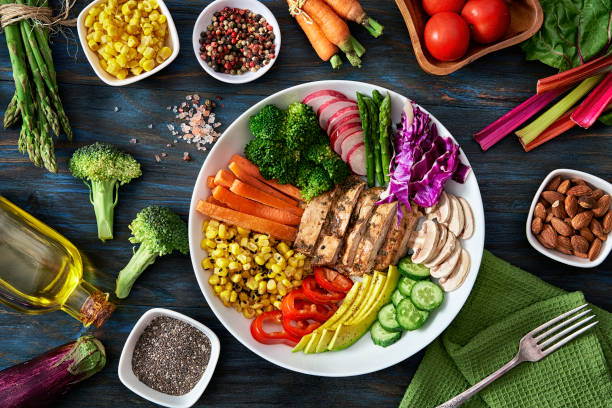
What to Eat Instead: The Heart-Protective Alternatives
Reducing ultra-processed food consumption doesn’t require a radical diet overhaul. Here are practical swaps for the most common ultra-processed foods:
| Instead of… | Try… |
|---|---|
| Sugary drinks | Sparkling water with lemon, unsweetened herbal tea |
| Packaged chips | Nuts, seeds, sliced vegetables with hummus |
| Breakfast cereal | Oatmeal with fresh fruit and nuts |
| Processed deli meats | Freshly cooked chicken or canned fish |
| Packaged cookies | Fresh fruit, dark chocolate (70%+) |
| Instant noodles | Whole grain pasta with olive oil and vegetables |
| Flavored yogurt | Plain Greek yogurt with honey and berries |
| Fast food burger | Homemade burger with whole grain bun and vegetables |
How to Read Labels and Identify Ultra-Processed Foods
Becoming a better label reader is one of the most practical skills for reducing ultra-processed food consumption. Here’s what to look for:
Red flags on ingredient lists:
- More than 5 ingredients
- Ingredients ending in “-ose” (glucose, fructose, maltose, dextrose) — all added sugars
- Hydrogenated or partially hydrogenated oils
- Emulsifiers — polysorbate 80, carrageenan, lecithin (in large amounts)
- Artificial flavors, colors, or sweeteners
- Preservatives — sodium benzoate, BHA, BHT
- Protein isolates — whey protein isolate, soy protein isolate
The simpler the ingredient list — ideally ingredients you recognize and could find in a kitchen — the better.
Frequently Asked Questions (FAQ)
Q: Are all processed foods bad for you? A: No — it’s important to distinguish between “processed” and “ultra-processed.” Minimally processed foods like canned tomatoes, frozen vegetables, plain yogurt, and cheese are processed but retain most of their nutritional value and don’t carry the same cardiovascular risks as ultra-processed foods.
Q: How much ultra-processed food is safe to eat? A: The research suggests a dose-response relationship — less is better. While no amount has been established as completely “safe,” the data indicates that keeping ultra-processed foods below 20% of total calorie intake significantly reduces cardiovascular risk compared to the typical American diet where they comprise 60%.
Q: Can you reverse heart disease risk by cutting out ultra-processed foods? A: Yes — significantly. Studies show that switching from a high ultra-processed food diet to a whole food diet produces measurable improvements in blood pressure, cholesterol, inflammation markers, and cardiovascular risk within 4–8 weeks.
Q: Are plant-based ultra-processed foods (like Beyond Meat) better than meat-based ones? A: Not necessarily from a cardiovascular standpoint. Plant-based ultra-processed foods still contain many of the same additives, sodium levels, and processing-related concerns as other ultra-processed foods. Whole food plant proteins — beans, lentils, tofu — are significantly healthier than any ultra-processed alternative.
Q: Is diet soda safer than regular soda for heart health? A: The evidence is mixed. Diet sodas avoid the blood sugar spikes of regular soda, but artificial sweeteners have their own associations with cardiovascular risk in some studies. Neither is ideal — water, sparkling water, and unsweetened beverages are consistently the best choices.
Q: How can I reduce ultra-processed food consumption without spending more money? A: Whole foods are often cheaper than people assume. Dried beans, lentils, oats, frozen vegetables, eggs, canned fish, and seasonal produce are all affordable, nutritious, and minimally processed. Cooking in batches reduces the convenience gap that drives ultra-processed food consumption.
The Bottom Line
The link between ultra-processed foods and heart attack risk is now one of the most well-established findings in nutritional epidemiology. A 67% higher risk of heart attack and stroke for the highest consumers is a number that demands attention — especially when ultra-processed foods make up the majority of what most people eat every day.
The good news: you don’t need to eat perfectly to make a meaningful difference. Reducing ultra-processed food consumption — not eliminating it entirely — produces measurable cardiovascular benefit. Every whole food swap matters.
Your heart is one of the few organs working every minute of every day to keep you alive. The least you can do is stop feeding it food engineered in a lab.
Start with 1 swap this week. Just 1. Your arteries will notice.