
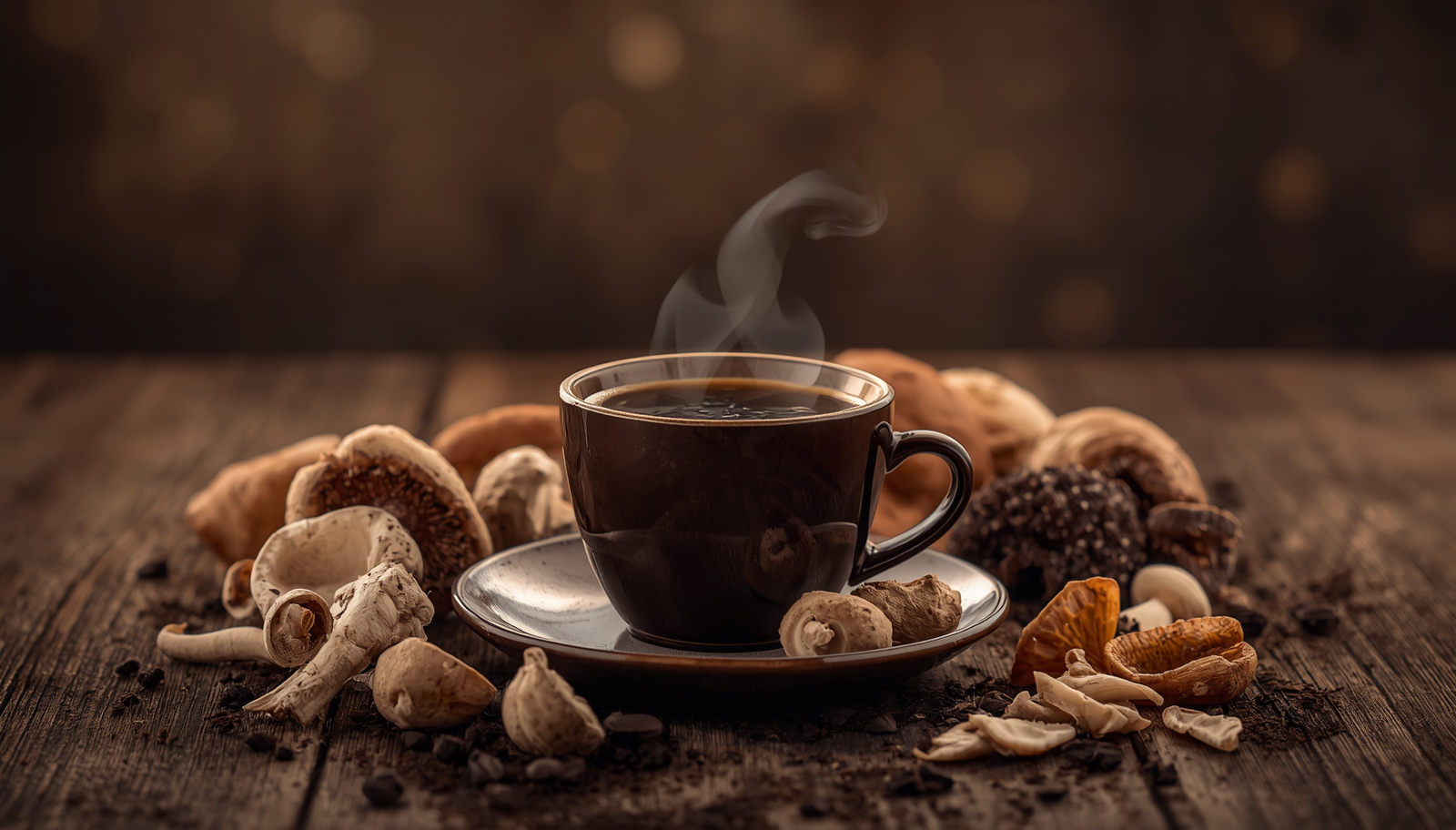
You’ve probably seen it everywhere — in health food stores, on TikTok, in your coworker’s reusable cup. Mushroom coffee has gone from fringe wellness trend to full-on mainstream staple, and the claims around it are bold: better focus, more energy, less anxiety, improved immunity, and even better sleep.
But here’s the real question: do mushroom coffee health benefits actually hold up to scrutiny? Or is this just another wellness fad dressed up in a clever cup?
The honest answer is somewhere in the middle — and it’s more interesting than either the hype or the cynicism would suggest. Let’s dig into what the science actually says, mushroom by mushroom.
I. What Is Mushroom Coffee, Exactly?
Before we get into the benefits, it helps to understand what mushroom coffee actually is — because it’s not what a lot of people imagine.
There are no floating mushroom chunks. No earthy sludge. Mushroom coffee is typically a blend of regular ground coffee and concentrated extracts from medicinal mushrooms — dried, ground into a fine powder, and mixed with coffee grounds at roughly a 1-to-1 ratio.
The result looks, brews, and largely tastes like regular coffee — often described as slightly earthier or nuttier, but familiar enough that most people make the switch easily.
The mushrooms used aren’t the kind you’d toss on a pizza. They’re medicinal species — the 4 most common being:
- Lion’s Mane (Hericium erinaceus) — linked to cognitive support and focus
- Reishi (Ganoderma lucidum) — known for immune modulation and stress relief
- Cordyceps (Cordyceps militaris) — associated with energy and endurance
- Chaga (Inonotus obliquus) — prized for its antioxidant density
These aren’t new discoveries. They’ve been used in Chinese and Ayurvedic medicine for centuries. What’s new is the modern science beginning to put clinical rigor behind those ancient uses — and the smart delivery format that makes them easy to consume daily.
II. Why People Are Making the Switch From Regular Coffee

Let’s be honest: regular coffee is amazing. It’s one of the most widely consumed substances on earth for a reason. But it does come with tradeoffs that a lot of people have started paying closer attention to.
For millions of daily coffee drinkers, the familiar downsides — jitters, mid-afternoon crashes, stomach acidity, disrupted sleep — have become less acceptable as wellness awareness has grown. If you’ve ever wondered why your morning coffee leaves you buzzing for 2 hours and then crashing hard, it’s because caffeine spikes your cortisol and adenosine systems sharply, then drops off.
Mushroom coffee typically contains significantly less caffeine than regular coffee — often around half the amount — which is part of what makes it gentler on the system. But the more interesting part is what the medicinal mushrooms themselves contribute.
This is where it connects to something broader. As we explored in our piece on morning coffee and longevity, your morning drink can do more than just wake you up — it can actively support long-term health. Mushroom coffee takes that idea and runs with it.
III. The Real Mushroom Coffee Health Benefits — Broken Down by Mushroom
Lion’s Mane: The Focus Mushroom
Lion’s mane is the most researched of the bunch, and for good reason. It contains compounds called hericenones and erinacines that have been shown in studies to stimulate the production of Nerve Growth Factor (NGF) — a protein essential for the growth, maintenance, and survival of neurons.
In practical terms? This means lion’s mane may support memory, concentration, and cognitive clarity over time. A study on post-menopausal women found a reduction in anxiety and depression symptoms with lion’s mane supplementation. Other research has explored its potential role in supporting individuals with age-related cognitive decline.
The caveat: most of the best research is still from animal or in-vitro studies. Human clinical trials are building but not yet definitive. That said, the biological mechanism is real and the early results are encouraging.
For anyone who wants to show up mentally sharp — whether for work, creative projects, or just navigating a busy day — lion’s mane is the most compelling ingredient in the mushroom coffee lineup.
Reishi: The Calm Energy Mushroom
Reishi has a 2,000-year history in East Asian medicine, where it was prized for promoting balance, longevity, and immunity. Modern science is starting to validate some of that reputation.
Reishi is one of the most potent adaptogens in nature — meaning it helps your body adapt to stress without overstimulating your system. It contains beta-glucans and triterpenoids that have shown immunomodulatory effects in preclinical studies, essentially helping regulate and strengthen the immune response.
On the stress and sleep front, reishi has been associated with promoting relaxation and reducing cortisol levels — which is especially relevant for anyone dealing with chronic stress or disrupted sleep. There’s a direct link here to what we’ve covered on magnesium glycinate for sleep — both work on the nervous system’s ability to downregulate from high-alert states, just through different pathways.
Reishi has also been explored for potential cardiovascular benefits, with some research suggesting reishi extracts may support healthy cholesterol levels.
Cordyceps: The Energy Mushroom
Cordyceps has a fascinating history — it was traditionally used in Tibetan mountain medicine as a vitality tonic for high-altitude endurance. Today it’s one of the most popular supplements among athletes.
The main reason? Cordyceps appears to enhance the body’s production of adenosine triphosphate (ATP) — the molecule your cells use for energy. It’s also been linked to improved oxygen utilization, which matters both for physical performance and everyday stamina.
Research on cordyceps and exercise performance has shown modest but real improvements in oxygen uptake and endurance. For non-athletes, the benefit shows up as more sustained, even energy throughout the day — without the spike-and-crash pattern of caffeine alone.
Combined with coffee, cordyceps helps smooth out the energy curve, delivering something closer to a slow burn than a sharp jolt.
Chaga: The Antioxidant Powerhouse
Chaga is sometimes called the “king of mushrooms” in traditional herbalism, and its antioxidant profile is genuinely impressive. It contains polyphenols and beta-glucans that combat oxidative stress — the cellular damage caused by free radicals that contributes to aging, inflammation, and chronic disease.
In animal studies, chaga has shown potential for supporting immune function, reducing inflammation, and even anti-tumor activity. While human evidence is still limited, the antioxidant content alone makes chaga a meaningful addition to your daily routine.
For context: oxidative stress and chronic low-grade inflammation are at the root of most of the major diseases people face today. Anything that genuinely helps reduce that burden is worth paying attention to — which is exactly the kind of principle behind our piece on 5 science-backed ways to live longer.
IV. What Mushroom Coffee Does Better Than Regular Coffee
Here’s a clean side-by-side picture:
Regular Coffee:
- Strong caffeine hit (around 95 mg per 8 oz)
- Risk of jitters, anxiety, or racing heart — especially in caffeine-sensitive people
- Higher acidity, which can irritate the gut lining
- Afternoon crash common
- Sleep disruption if consumed too late
Mushroom Coffee:
- Lower caffeine (typically 40 to 50 mg per serving)
- Adaptogenic compounds that buffer the stress response
- Gentler on the stomach — lower acidity suits people with digestive sensitivity
- More sustained energy curve
- Reishi may actively support sleep quality rather than working against it
For people with gut sensitivity, the lower acidity of mushroom coffee is particularly notable. We know from the research covered in our gut bacteria and serotonin piece that gut health has profound downstream effects on mood, energy, and cognitive function. Anything that reduces gut irritation while still delivering a morning boost is a meaningful win.
V. Who Should Consider Trying Mushroom Coffee?
Mushroom coffee isn’t for everyone, and that’s fine. But there are certain profiles where it makes a lot of sense:
You might love it if you:
- Are caffeine-sensitive but still want a morning ritual
- Experience jitters, anxiety, or a crash with regular coffee
- Want to support focus and memory over the long term
- Deal with chronic stress and want daily adaptogenic support
- Have a sensitive stomach or digestive issues with regular coffee
- Are interested in immune support as part of daily wellness
- Want to reduce caffeine intake without giving up coffee entirely
You might not notice much difference if you:
- Tolerate regular coffee well and love the strong caffeine hit
- Are looking for immediate, dramatic effects (this is a gradual, cumulative benefit)
- Are expecting pharmaceutical-level results from a beverage
The key thing to understand about mushroom coffee is that it’s not medicine — it’s functional nutrition. The benefits build over weeks of consistent use, not after 1 cup.
VI. What to Look for When Buying Mushroom Coffee
Not all mushroom coffee products are created equal, and this is where a lot of people get misled.
Here’s what to check before buying:
1. Fruiting body vs. mycelium: Look for products made from the fruiting body of the mushroom (the actual mushroom), not just the mycelium (the root system). Fruiting body extracts contain significantly higher concentrations of the active compounds — particularly beta-glucans.
2. Extraction method: Dual-extracted products (using both hot water and alcohol extraction) capture a broader spectrum of bioactive compounds. Single-extraction products may miss key components.
3. Beta-glucan content: The label should specify beta-glucan content. A quality product will have at least 20% beta-glucans by assay — not just “polysaccharides,” which is a vaguer and less meaningful measure.
4. Transparent sourcing: Look for brands that provide a Certificate of Analysis (COA) showing independent testing for identity, potency, and heavy metals.
5. Mushroom species listed clearly: The label should name the specific species (e.g., Hericium erinaceus for lion’s mane), not just “mushroom blend.”
The mushroom coffee space is exploding right now, and as with any booming wellness category, there’s a wide range of quality. Taking 5 minutes to check these criteria before purchasing makes a real difference.
VII. How to Make Mushroom Coffee Part of Your Routine
The simplest approach: swap your morning coffee for mushroom coffee 5 days a week and keep 1 or 2 days on regular coffee if you prefer the stronger caffeine hit.
Most mushroom coffee products brew exactly like regular coffee — drip, French press, pour-over, or espresso machine. Instant mushroom coffee options are also widely available for convenience.
A few practical notes:
- Give it at least 3 to 4 weeks before evaluating results. The cognitive and adaptogenic benefits are cumulative.
- Most people find the taste adjustment takes 3 to 5 days — the earthy notes become pleasant quickly.
- If you’re adding it to a broader wellness routine, it pairs well with the sleep and stress practices we’ve covered — including the somatic exercises for beginners that help regulate your nervous system from the body side while mushroom coffee supports it from the nutritional side.
VIII. A Note on Safety and Who Should Be Cautious
Mushroom coffee is generally well-tolerated and considered safe for most healthy adults. However, a few groups should exercise caution:
- People on immunosuppressant medications: Reishi and turkey tail can modulate the immune system, which may interact with these drugs.
- Those with mushroom allergies: Obvious but worth stating — if you’re allergic to fungi, avoid.
- Pregnant or breastfeeding individuals: As with most supplements, consult a healthcare provider before use.
- People with autoimmune conditions: The immunomodulatory effects of some mushrooms may not be appropriate without medical guidance.
As always, if you’re on medication or managing a health condition, run it by your doctor before adding any new supplement — even a food-based one like mushroom coffee.
The Bottom Line
Mushroom coffee health benefits are real — but they’re also nuanced. This isn’t a miracle drink. It won’t replace sleep, fix a poor diet, or cure anxiety on its own.
What it will do, used consistently and sourced well, is give your body a daily dose of adaptogenic support, immune-modulating compounds, antioxidants, and cognitive-protective nutrients — delivered in a format most people are already comfortable with and genuinely enjoy.
The 4 main mushrooms — lion’s mane for focus, reishi for calm and immunity, cordyceps for energy, and chaga for antioxidant protection — each bring something distinct to the cup. Together, they make for a morning ritual that does a lot more than wake you up.
If you’ve been on the fence, 2026 is a good time to try it. The products have gotten better, the research has gotten stronger, and the barrier to entry is as low as swapping your next bag of coffee grounds.
Your morning ritual might be about to get a real upgrade.
Want to build a full morning wellness stack? Pair mushroom coffee with the somatic grounding practices from our somatic exercises for beginners guide and check out 5 science-backed ways to live longer for the bigger picture on longevity nutrition.