Most people assume that staying healthy into old age is mostly about what you stop doing — stop eating junk food, stop drinking, stop sitting too much. And while those things matter, a fascinating 10-year Japanese study suggests that the best exercise for seniors longevity may be simpler than anyone expected.
And what was the single habit most strongly associated with staying out of long-term care, maintaining independence, and living a longer, healthier life?
Cycling.
Not marathons. Not intense gym training. Not a complicated supplement routine. Just getting on a bike and pedaling — regularly, consistently, for years.
Here’s what the research found, why it works, and how you can apply it — even if you haven’t been on a bike in decades.
What the Japanese Study Found
The study tracked thousands of Japanese adults over 10 years, examining the relationship between daily activity habits and the risk of requiring long-term care — a key indicator of declining health and loss of independence in older age.
The results were striking:
- Seniors who cycled regularly had significantly lower rates of needing long-term care compared to non-cyclists
- Regular cyclists maintained better physical function, including balance, leg strength, and cardiovascular fitness
- The protective effect was seen across age groups — even people who started cycling later in life showed meaningful benefit
- Cyclists also showed lower rates of cognitive decline — suggesting the benefits extended beyond just physical health
This wasn’t a minor effect. The differences were large enough that researchers concluded regular cycling should be actively encouraged as a public health strategy for aging populations.
Why Cycling Is Uniquely Powerful for Older Adults
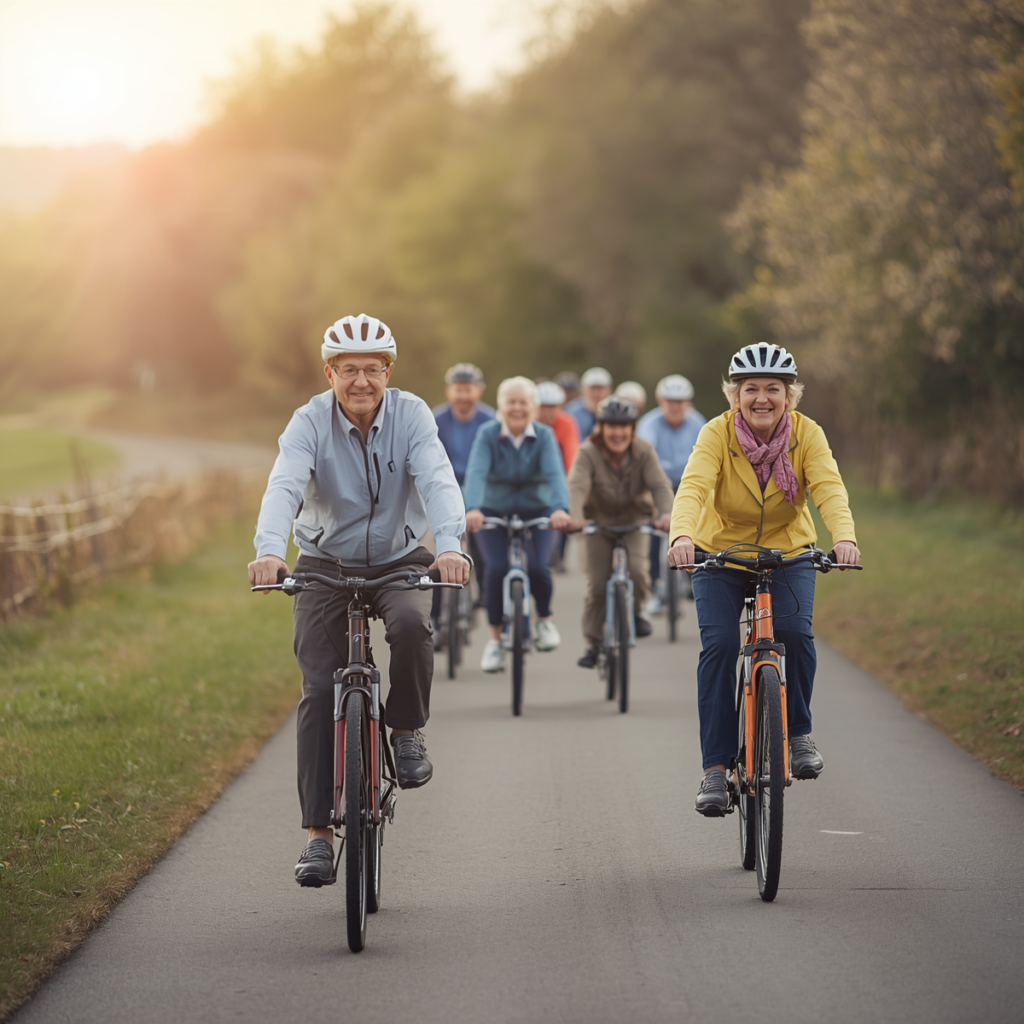
There are lots of ways to exercise. So what makes cycling stand out — especially for older adults?
1. It’s Low-Impact on Joints
Unlike running or high-impact aerobics, cycling puts almost no stress on the knees, hips, and ankles. The circular pedaling motion works through a smooth range of motion that strengthens muscles without grinding joints. This makes it accessible for people with arthritis, previous knee injuries, or general joint sensitivity — conditions that often prevent older adults from doing other forms of exercise.
2. It Builds Exactly the Muscles That Matter Most for Aging
The muscles most critical for functional independence as you age are in your lower body — quads, glutes, hamstrings, and calves. These are the muscles that allow you to stand up from a chair, climb stairs, maintain balance, and prevent falls. Cycling directly targets all of these muscle groups, keeping them strong and functional.
3. It’s a Powerful Cardiovascular Workout
Heart disease remains the leading cause of death globally, and cardiovascular fitness declines rapidly with age if not actively maintained. Cycling is a highly effective aerobic workout that strengthens the heart, lowers blood pressure, improves cholesterol profiles, and reduces the risk of heart attack and stroke — all of which become increasingly critical health priorities after age 60.
4. It Challenges Balance and Coordination
Riding a bike requires constant micro-adjustments in balance and coordination. Over time, this trains the neuromuscular system in ways that reduce fall risk — one of the most dangerous health threats for older adults. Falls are the leading cause of injury-related death in people over 65, and anything that improves balance and body awareness is worth taking seriously.
5. It Benefits Cognitive Health
The combination of physical exertion, balance challenges, navigation, and outdoor stimulation that cycling provides is uniquely good for brain health. Multiple studies show that regular cycling improves memory, attention, and executive function in older adults — and may help slow the progression of age-related cognitive decline.
6. It’s Enjoyable — Which Means People Actually Keep Doing It
This might sound trivial, but it’s actually crucial. The best exercise for healthy aging is the one you’ll maintain for years or decades. Cycling tends to be genuinely enjoyable — you get to go places, see things, feel the breeze, and experience a sense of freedom and movement that treadmills and gym machines rarely replicate. Enjoyment is one of the strongest predictors of long-term exercise adherence.
The Independence Factor: Why This Research Matters So Much
The phrase “needing long-term care” might sound abstract, but what it represents is deeply personal: the loss of independence.
For most people, 1 of their deepest fears about aging is becoming dependent on others — not being able to live in their own home, not being able to do the things they love, not being able to care for themselves. Long-term care — whether in a facility or through in-home assistance — represents the point at which independence has significantly declined.
The fact that something as accessible as regular cycling can meaningfully reduce the risk of reaching that point is profoundly significant. It means that the choices you make about movement today have direct implications for the quality of your life 10, 20, or 30 years from now.
This isn’t about vanity or performance. It’s about being able to live on your own terms for as long as possible.
You Don’t Have to Be a Cyclist to Benefit
Here’s the good news: you don’t need to own a road bike or clip into pedals or ride 50 miles on weekends to get these benefits.
The research points to regular, moderate cycling as the key factor — not intensity, distance, or athletic performance. Here are several accessible ways to incorporate cycling into your life:
Stationary Bikes at Home or the Gym A stationary bike is one of the safest and most convenient options for older adults. There’s no balance risk, no traffic, no weather concerns. You can ride while watching TV, listening to a podcast, or reading. Even 20–30 minutes of stationary cycling 3–4 times per week delivers meaningful health benefits.
Recumbent Bikes For people with lower back issues or limited hip mobility, recumbent bikes (where you sit in a reclined position with the pedals in front of you rather than below) are an excellent alternative. They’re widely available at gyms and are comfortable for extended sessions.
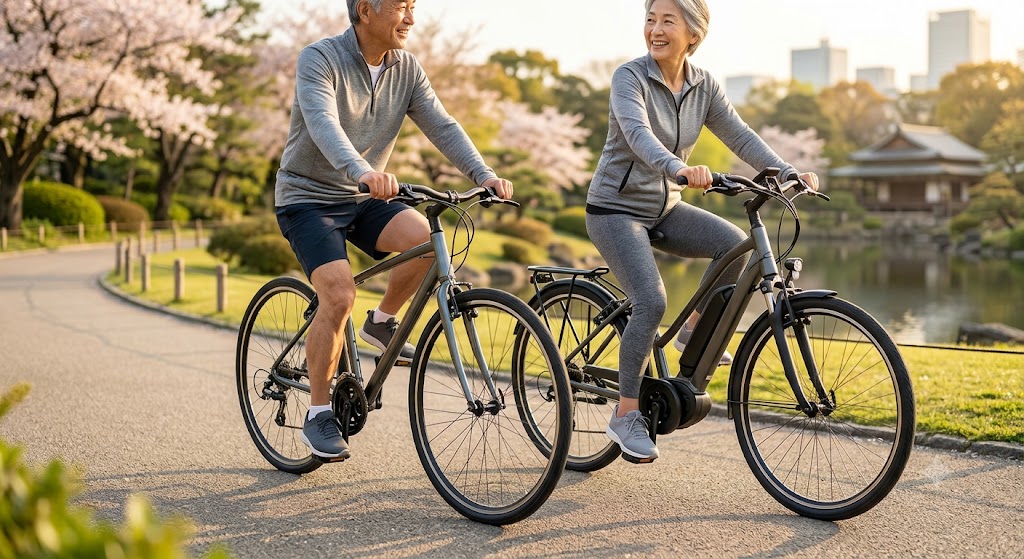
E-Bikes Electric-assist bikes are genuinely game-changing for older adults. They provide a motor boost when you need it — on hills, into headwinds, or when you’re getting tired — which means you can cycle further and longer without overexerting yourself. Research on e-bikes shows that riders still get meaningful cardiovascular and muscular benefit, even with the motor assist.
Standard Outdoor Cycling If you’re comfortable on a regular bike and live somewhere with accessible cycling infrastructure, outdoor riding combines all the physical benefits with the added mental health boost of being in nature and fresh air.
How Much Cycling Do You Actually Need?
Based on the research, here’s a practical guideline:
| Frequency | Duration | Benefit Level |
|---|---|---|
| 2 days/week | 20–30 min each | Good — meaningful health benefit |
| 3 days/week | 30 min each | Better — strong cardiovascular and muscular benefit |
| 4–5 days/week | 30–45 min each | Excellent — aligns with the study’s strongest outcomes |
| Daily | 20–30 min | Outstanding — maximum long-term benefit |
The key is consistency over intensity. A moderate-paced 30-minute ride 4 days a week will do more for your long-term health than 1 intense cycling session on the weekend.
Getting Started: A 4-Week Beginner Cycling Plan for Seniors
If you haven’t cycled in a while — or ever — here’s a gentle, progressive plan to build the habit safely:
Week 1: 15 minutes, 3 days. Easy pace, flat terrain (or low resistance on a stationary bike). Focus on comfort and form.
Week 2: 20 minutes, 3 days. Slightly increase pace. Notice how your legs feel — some muscle soreness is normal.
Week 3: 25 minutes, 4 days. Add a 4th session. Begin to vary your pace slightly — a few minutes at a brisker effort.
Week 4: 30 minutes, 4 days. You’re now at a level of cycling activity consistent with the study’s health-protective findings.
From here, maintain or gradually build. There’s no rush. The goal is to make this a permanent part of your life, not a 30-day challenge.
Safety Tips for Older Adults Cycling
Before jumping on a bike, a few important safety considerations:
- Get a medical clearance if you have cardiovascular disease, diabetes, severe joint issues, or balance problems
- Wear a helmet — always. Head injuries are the most serious cycling injury at any age, and the risk increases with age
- Start on flat, quiet roads or a stationary bike until you’ve rebuilt your confidence and balance
- Check your bike fit. A properly fitted bike dramatically reduces strain on your back, knees, and wrists
- Stay hydrated. Older adults are more susceptible to dehydration during exercise
- Consider an e-bike if you live in a hilly area or have concerns about overexertion
Frequently Asked Questions (FAQ)
Q: Is it safe for seniors to start cycling if they haven’t exercised in years? A: For most older adults, yes — especially on a stationary bike. Start very gently, at low intensity, for short durations. If you have cardiovascular conditions, diabetes, or significant joint problems, check with your doctor before starting any new exercise program.
Q: How does cycling compare to walking for older adults? A: Both are excellent. Walking requires no equipment and is more accessible. Cycling tends to be more joint-friendly for people with knee or hip issues, provides a stronger cardiovascular stimulus, and builds more lower-body muscle. Ideally, incorporate both into your routine.
Q: Can cycling help with arthritis? A: Yes — cycling is often recommended by physiotherapists for people with arthritis, particularly knee arthritis. The low-impact, smooth pedaling motion lubricates the joints and strengthens surrounding muscles without the jarring impact of walking or running. Start slowly and use appropriate resistance.
Q: What’s the best type of bike for older adults? A: It depends on your fitness level and any physical limitations. A stationary or recumbent bike is safest for beginners. An e-bike is excellent for outdoor riding with less exertion. A standard upright bike or hybrid bike suits those who are comfortable cycling and want the full outdoor experience.
Q: How quickly will I notice benefits from cycling? A: Most people notice improved energy levels and mood within 2–3 weeks. Cardiovascular improvements become measurable within 4–6 weeks. Strength gains and balance improvements take 8–12 weeks to become noticeable.
Q: Does stationary cycling count, or does it have to be outdoor cycling? A: Stationary cycling absolutely counts. The health benefits come from the physical act of cycling — the cardiovascular effort, muscle activation, and movement pattern — not from being outdoors specifically. That said, outdoor cycling adds mental health benefits and motivation that indoor cycling doesn’t.
The Bottom Line
A 10-year study of thousands of seniors found 1 clear, simple habit that dramatically reduced the risk of needing long-term care and helped people stay healthy and independent longer: regular cycling.
Not intense training. Not a demanding fitness program. Just getting on a bike consistently and pedaling.
The implications are enormous — and deeply hopeful. Your independence in old age is not just a matter of luck or genetics. It’s something you can actively shape, right now, with something as accessible as a bicycle.
Whether that’s a stationary bike in your living room, a recumbent bike at the gym, or an e-bike on a local trail — the path to a longer, more independent life might be measured in pedal strokes.
Start pedaling.