Longevity residences healthy aging is no longer just a concept — it’s a rapidly growing real estate movement that treats your home not just as a place to live, but as an active tool for living longer.
The idea sounds almost too good to be true: a home designed from the ground up to extend your healthspan — the number of years you live in good health. But it’s not science fiction. It’s one of the fastest-growing segments of the global real estate and wellness industries, and the science behind it is more solid than you might expect.
We’ve known for decades that environment shapes health. Where you live — the air quality, the walkability, the social fabric, the noise levels, the access to green space — has a profound impact on how long and how well you live. Longevity residences take that insight and run with it, asking: what if we deliberately designed living spaces to maximize every environmental variable that supports a long, healthy life?
Here’s what longevity residences actually are, what makes them work, and — most practically — what you can do to turn your own home into a more longevity-supporting environment right now.
What Are Longevity Residences?

Longevity residences are a new category of residential real estate — ranging from individual luxury apartments to entire purpose-built communities — specifically designed around evidence-based features that support physical health, mental wellbeing, social connection, and extended healthspan.
The Global Wellness Summit, which named longevity residences as a major 2026 real estate trend, describes them as homes that will increasingly be judged not by square footage or luxury finishes, but by how well they support healthspan across decades.
These aren’t just wellness amenities tacked onto a standard luxury development. True longevity residences integrate health-supporting design at every level — from the materials used in construction to the layout of communal spaces to the technology embedded in walls and floors.
Key features found in purpose-built longevity residences include:
Air quality systems: Hospital-grade HEPA and MERV filtration, continuous air quality monitoring, VOC-free materials and finishes, and natural ventilation systems that maintain optimal indoor air quality around the clock.
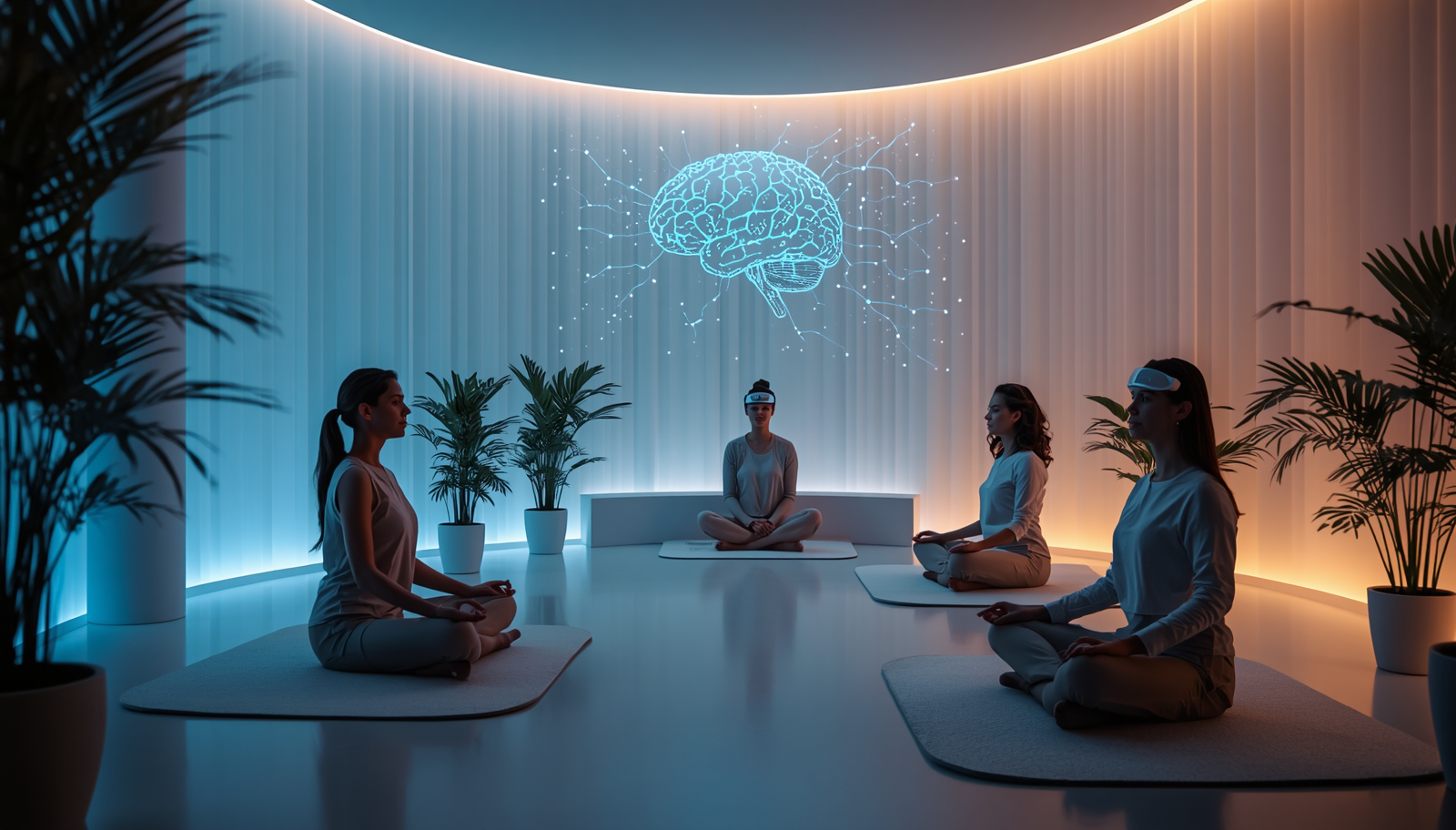
Circadian lighting: Smart lighting systems that automatically adjust color temperature and brightness throughout the day — bright, blue-enriched light in the morning to anchor circadian rhythms, warm amber tones in the evening to support melatonin production and sleep quality.
Acoustic design: Sound insulation and noise management designed to minimize the chronic low-grade noise exposure that drives stress hormone elevation and cardiovascular risk — a largely invisible health hazard in most urban environments.
Movement-integrated design: Staircases positioned and designed to be more appealing than elevators. Walking paths built into building layouts. Fitness facilities with a clinical rather than aesthetic focus. Everything designed to make movement the default rather than the exception.
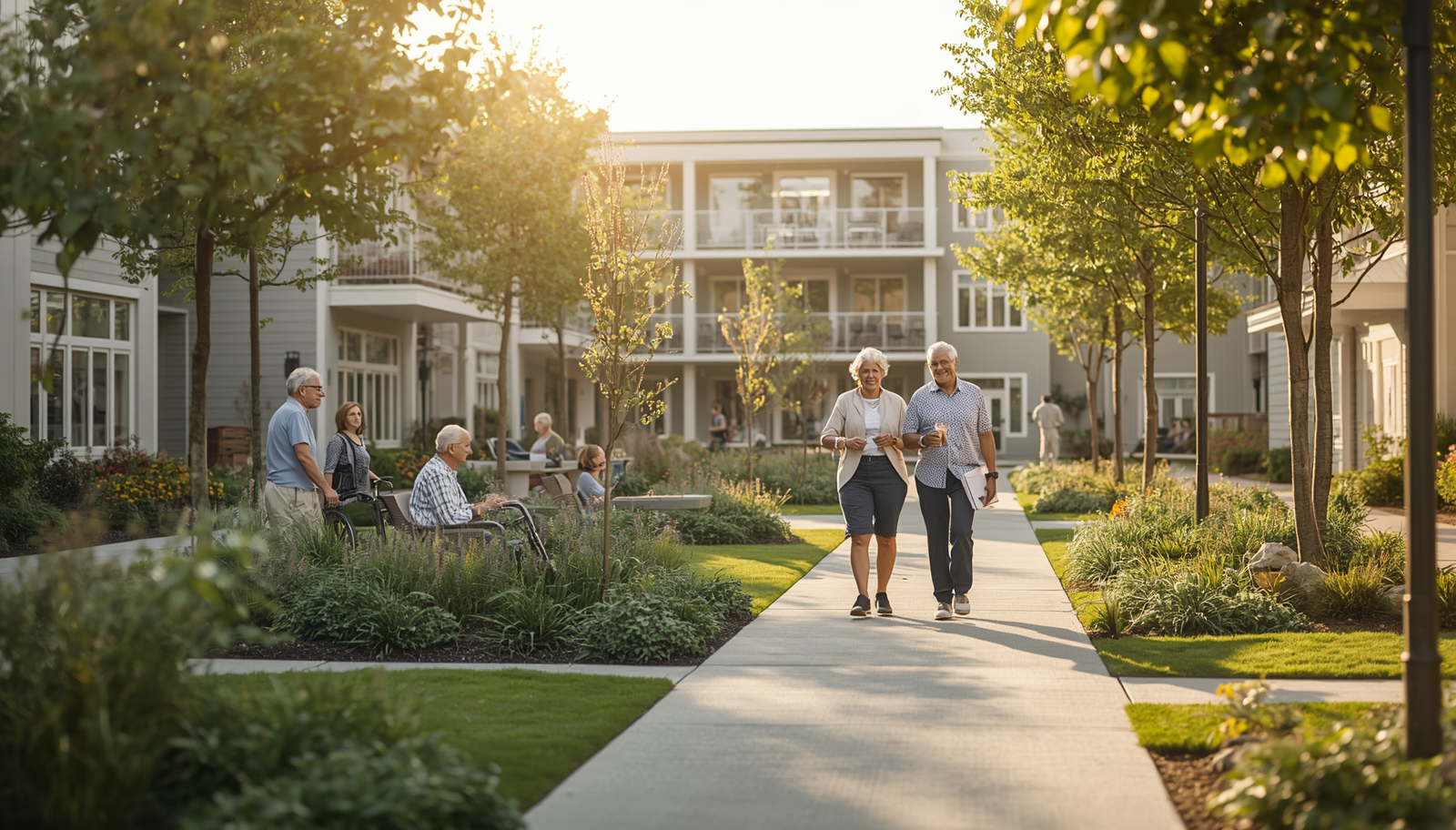
Social architecture: Communal spaces, shared gardens, and building layouts deliberately designed to encourage casual, spontaneous social interaction — addressing the loneliness epidemic with architecture rather than apps.
Nature integration: Biophilic design principles — natural materials, abundant plants, water features, views of nature, natural light — shown to reduce stress, lower blood pressure, and improve cognitive function and mood.
Nutrition infrastructure: On-site organic gardens, high-quality communal kitchens, resident nutrition programs, and food environments designed to make healthy eating the path of least resistance.
Health monitoring technology: Embedded sensors that track air quality, temperature, humidity, and in some developments, passive health monitoring systems integrated into floors and mirrors.
The Science: How Your Environment Shapes Your Lifespan
The evidence that environment shapes longevity is some of the most compelling in all of health research — and it comes from multiple distinct lines of inquiry.
The Blue Zones Evidence
The most famous evidence comes from the Blue Zones — the 5 regions of the world where people live measurably longer and healthier lives than anywhere else:
- Sardinia, Italy
- Okinawa, Japan
- Nicoya Peninsula, Costa Rica
- Ikaria, Greece
- Loma Linda, California
Researcher Dan Buettner’s analysis of these communities identified that longevity wasn’t primarily driven by genetics — it was driven by environmental and social design. Blue Zone communities share:
- Natural, daily movement built into the environment (hills to walk, gardens to tend)
- Strong social fabric and multigenerational community structure
- Plant-forward food environments where healthy food is the default
- Low chronic stress and strong sense of purpose
- Clean air and minimal noise pollution
The key insight: longevity in Blue Zones isn’t chosen — it’s the default outcome of the environment. People don’t decide to exercise — their environment requires movement. They don’t decide to socialize — their community structure creates constant connection.
Longevity residences are essentially an attempt to engineer Blue Zone environmental conditions into modern housing.
Air Quality and Lifespan
Indoor air quality is one of the most underappreciated health variables. The average person spends 90% of their time indoors — and indoor air can be 2–5 times more polluted than outdoor air due to VOCs from furniture and building materials, cooking emissions, mold, and poor ventilation.
Research from Harvard’s T.H. Chan School of Public Health found that improving indoor air quality produces measurable improvements in cognitive function, sleep quality, and cardiovascular health markers. Long-term exposure to poor indoor air quality is associated with significantly elevated risks of heart disease, stroke, and respiratory disease.
Noise Pollution and Cardiovascular Risk
Chronic noise exposure — from traffic, neighbors, urban environments — is a documented cardiovascular risk factor. The World Health Organization estimates that 1 million healthy life years are lost annually in Western Europe alone due to traffic noise. Noise-related cardiovascular disease is driven by chronic cortisol elevation triggered by noise even during sleep — when the nervous system remains partially alert to sound.
Acoustic design in longevity residences directly addresses a cardiovascular risk factor that most people never think about.
Social Architecture and Longevity
As discussed in our article on human connection, strong social ties are associated with 50% higher survival rates compared to weak social ties. Building design profoundly influences social interaction — or its absence.
Research on housing design consistently shows that buildings with communal spaces, shared amenities, and layouts that create natural opportunities for casual interaction produce measurably higher rates of friendship formation and social connectedness among residents.
Natural Light and Circadian Health
Adequate natural light exposure — particularly morning light — is essential for circadian rhythm regulation, which affects sleep quality, hormone balance, immune function, mood, and metabolic health. Most modern buildings severely under-deliver on natural light — with residents spending their days under fluorescent lighting that provides insufficient intensity and wrong-spectrum light for circadian health.
Longevity residences prioritize natural light access and supplement it with circadian-aligned artificial lighting systems.
You Don’t Need to Buy a Longevity Residence — Do This Instead
Purpose-built longevity residences are currently expensive and limited in availability. But the principles behind them are entirely applicable to wherever you live right now. Here’s how to apply longevity residence principles to your own home:
Improve Your Indoor Air Quality
- Open windows for 15–20 minutes daily to flush indoor air
- Add HEPA air purifiers to your bedroom and main living space
- Choose low-VOC paints, furniture, and cleaning products
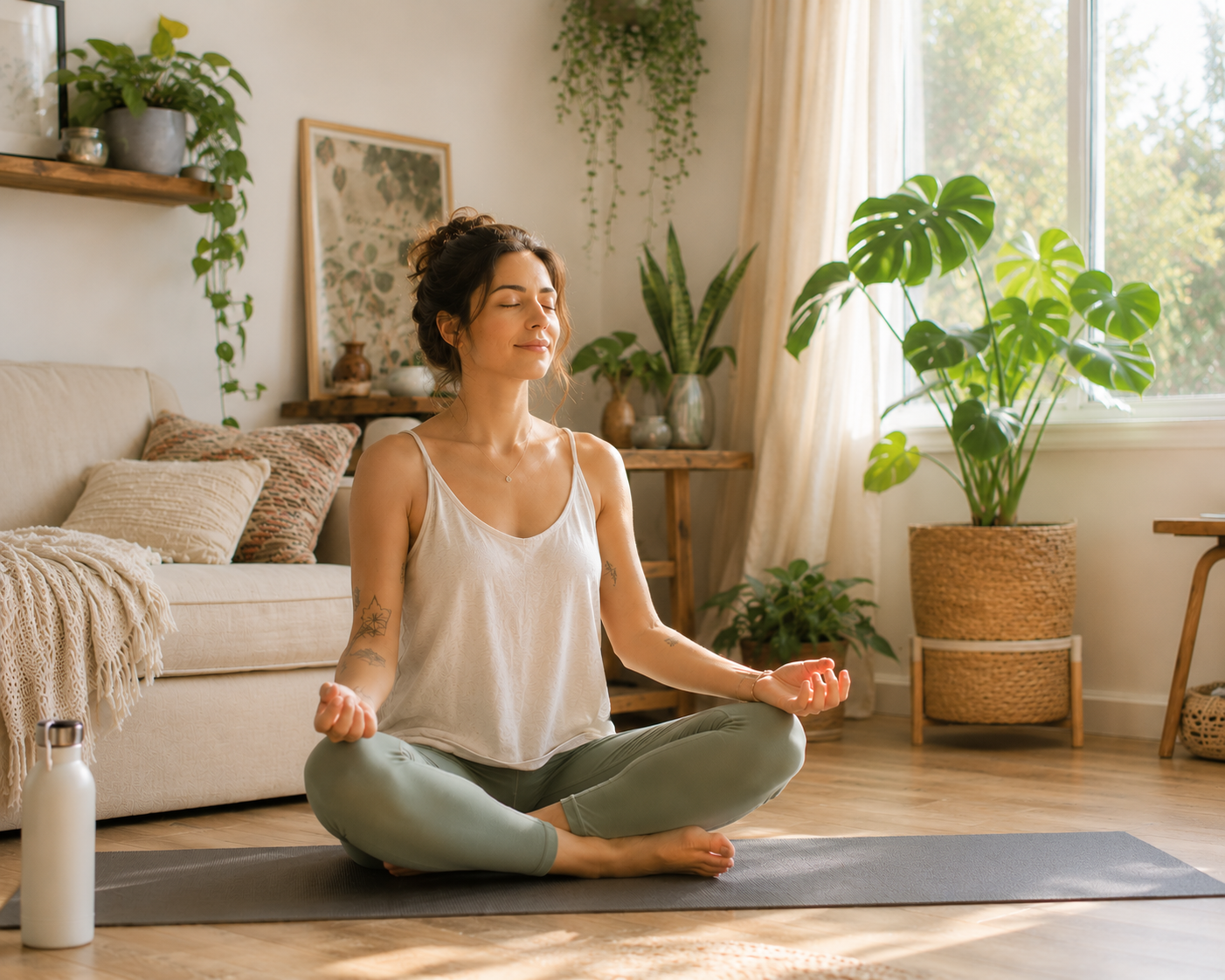
- Add 10–15 houseplants — snake plants, pothos, peace lilies — which measurably improve air quality
- Fix any moisture or mold issues immediately — mold is a serious indoor air quality hazard
Optimize Your Lighting
- Get outdoor light exposure within 30 minutes of waking — even 10 minutes makes a meaningful difference
- Use warm, dim lighting in the evenings — switch overhead lights for lamps after 7 PM
- Install smart bulbs (Philips Hue, LIFX) that automatically shift from cool-white in the morning to warm-amber in the evening
- Keep your bedroom as dark as possible during sleep — blackout curtains are a high-ROI longevity investment
Design for Movement
- Remove the elevator from your default — take stairs every time
- Place your yoga mat, resistance bands, or weights somewhere visible and accessible
- Set up a standing desk or desk converter if you work from home
- Create a walking loop in your neighborhood that you do daily without having to make a decision about it
Reduce Noise
- Use white noise machines or earplugs if you live in a noisy environment
- Add rugs, curtains, and upholstered furniture — all of which absorb sound and reduce indoor noise levels
- Consider acoustic panels for home offices or bedrooms if noise is a significant issue
Build Social Architecture Into Your Life
- Create regular social rituals anchored to your home — weekly dinners, monthly gatherings
- Introduce yourself to neighbors — research shows that knowing your neighbors is independently associated with better health outcomes
- Design your outdoor space (balcony, garden, front porch) to facilitate casual social interaction
Create a Sleep Sanctuary
- Keep the bedroom cool (65–68°F), dark, and quiet
- Remove all screens from the bedroom
- Invest in a quality mattress and pillow — you spend a third of your life in bed
- Consider a cooling mattress pad if temperature regulation is a sleep challenge
Frequently Asked Questions (FAQ)
Q: What exactly is a longevity residence? A: A longevity residence is a home or residential community specifically designed around evidence-based features that support physical health, mental wellbeing, social connection, and extended healthspan. Features include advanced air quality systems, circadian lighting, acoustic design, movement-integrated layouts, social architecture, and nature integration.
Q: Are longevity residences affordable? A: Currently, purpose-built longevity residences are predominantly in the luxury market. However, the underlying principles — air quality, lighting, movement, social connection, noise reduction — can be applied to any home at a range of budgets. The trend is expected to expand into more accessible price points as demand grows.
Q: How much does where you live actually affect how long you live? A: Significantly. Research from the Blue Zones and broader environmental health studies suggests that environment accounts for a substantial portion of longevity variation — with some estimates suggesting environment and lifestyle factors account for approximately 70–80% of longevity outcomes, with genetics accounting for the remaining 20–30%.
Q: What’s the single most impactful change I can make to my home for longevity? A: Based on the evidence, improving sleep environment — cool, dark, quiet bedroom — and indoor air quality produce the most wide-ranging health benefits relative to cost and effort. Both affect virtually every dimension of health simultaneously.
Q: Are Blue Zone principles actually applicable to urban living? A: Yes — with deliberate effort. Many Blue Zone principles (walkable environments, communal eating, daily movement, strong social ties, purpose) can be intentionally cultivated in urban settings even without the natural environmental advantages of the original Blue Zone communities.
Q: Will longevity residences become mainstream? A: Industry analysts and the Global Wellness Summit predict that longevity-focused design will increasingly become a standard feature of premium residential real estate globally — and that health-supporting design features will gradually filter down to mainstream housing as costs decrease and consumer demand grows.
The Bottom Line
Longevity residences represent a fascinating convergence of architecture, environmental science, and longevity research — and they’re asking a question that deserves to be asked: what if we designed our homes to actively support our health, rather than just house our possessions?
The science is clear that environment profoundly shapes how long and how well we live. Air quality, light, sound, movement opportunity, social connection, and nature access all have measurable effects on health outcomes over decades.
You don’t need to buy a purpose-built longevity residence to benefit from these insights. You need to look at your home through a health lens — and make intentional changes to the air you breathe, the light you’re exposed to, the noise you’re subjected to, and the ease with which your environment supports movement and connection.
Your home should be working for your health. If it isn’t, that’s something worth changing — 1 room at a time.