
When GLP-1 drugs like Ozempic and Wegovy first exploded onto the scene, most of the buzz centered around younger and middle-aged adults. The dramatic before-and-after transformations. The celebrity endorsements. The social media testimonials from people in their 30s and 40s who’d finally found something that worked.
But a major new analysis is shifting the conversation — because Ozempic for older adults may actually outperform expectations in a demographic that weight loss conversations too often overlook.
Here’s what the research found, what it means for older adults struggling with weight-related health issues, and the important caveats you need to know before considering this medication.
What the New Analysis Found
The analysis — one of the most comprehensive looks at GLP-1 drug effectiveness in older adults to date — examined data from thousands of patients aged 65 and over who had been prescribed semaglutide (the active ingredient in both Ozempic and Wegovy).
The findings were striking across multiple dimensions:
- Adults over 65 lost an average of 12–15% of their body weight over 68 weeks on semaglutide — comparable to results seen in younger adults
- Participants showed significant improvements in cardiovascular risk markers, including blood pressure, cholesterol, and inflammation levels
- Blood sugar control improved dramatically, with many participants seeing reduced HbA1c levels
- Quality of life scores — including mobility, energy levels, and self-reported wellbeing — improved significantly
- The drug was well-tolerated by most older participants, with side effect profiles similar to those seen in younger age groups
Perhaps most importantly, the cardiovascular benefits were particularly pronounced in older adults, who typically face higher baseline cardiovascular risk.
Why Weight Management Is Especially Critical After 65

To understand why these findings matter so much, it’s worth stepping back to look at what excess weight actually does to the aging body.
The Compounding Effect of Weight on Aging Health
As we age, excess body weight doesn’t just affect how we look or feel in the short term — it actively accelerates the deterioration of multiple body systems simultaneously.
1. Cardiovascular strain increases. The heart works harder to pump blood through a larger body. Over decades, this elevates the risk of heart failure, atrial fibrillation, and coronary artery disease — all conditions that become dramatically more common after 65.
2. Joint damage accelerates. Every extra pound of body weight puts roughly 4 pounds of pressure on the knees. For someone carrying 30 extra pounds, that’s 120 additional pounds of force on already-aging knee joints with every step — a direct driver of osteoarthritis and mobility loss.
3. Metabolic dysfunction deepens. Insulin resistance typically worsens with age, and excess body fat — particularly visceral fat around the organs — amplifies this effect. The result is higher risk of type 2 diabetes, metabolic syndrome, and related complications.
4. Sleep apnea risk surges. Obesity is the leading risk factor for obstructive sleep apnea, which in older adults is associated with cognitive decline, cardiovascular disease, and dramatically reduced quality of sleep.
5. Cognitive decline accelerates. Emerging research links excess visceral fat to neuroinflammation — a process increasingly believed to contribute to Alzheimer’s disease and other forms of dementia.
In short, weight management after 65 isn’t just about fitting into clothes or feeling better. It’s about preserving the function of every major organ system in your body.
How Semaglutide Actually Works
Semaglutide works by mimicking a naturally occurring hormone called GLP-1 (glucagon-like peptide-1), which is released by the gut after eating. GLP-1 signals the brain that you’re full, slows the emptying of the stomach, and regulates blood sugar by stimulating insulin release.
In people who are overweight or obese, this signaling system is often blunted — they don’t get the “I’m full” signal as strongly or as quickly as they should. Semaglutide essentially turns that signal back up.
The practical result: people on semaglutide eat less, feel full faster, experience fewer food cravings, and — over time — lose significant weight without the constant hunger and deprivation that makes traditional dieting so difficult.
For older adults specifically, this mechanism is particularly valuable. Many older adults have tried and failed with conventional diets repeatedly. The physiological barriers to weight loss — including metabolic slowdown, hormonal changes, and decreased physical capacity — are even more significant after 65. A medication that addresses the neurobiological drivers of appetite can make a meaningful difference where willpower alone couldn’t.
The Cardiovascular Benefit: A Bigger Deal Than the Weight Loss
Here’s something that often gets lost in the Ozempic conversation: for many older adults, the cardiovascular benefits of semaglutide may actually be more significant than the weight loss itself.
The landmark SELECT trial — a major cardiovascular outcomes study involving over 17,000 participants — found that semaglutide reduced the risk of major cardiovascular events (heart attack, stroke, cardiovascular death) by 20% in overweight or obese adults with established heart disease.
Crucially, this cardiovascular benefit appeared to be at least partially independent of the weight loss — meaning the drug may have direct protective effects on the heart and blood vessels beyond simply reducing body weight.
For adults over 65, who face the highest baseline cardiovascular risk, this finding is enormously significant.
Important Considerations and Risks for Older Adults
This wouldn’t be a complete picture without addressing the real risks and limitations. Semaglutide is a powerful medication, and older adults face some specific considerations.
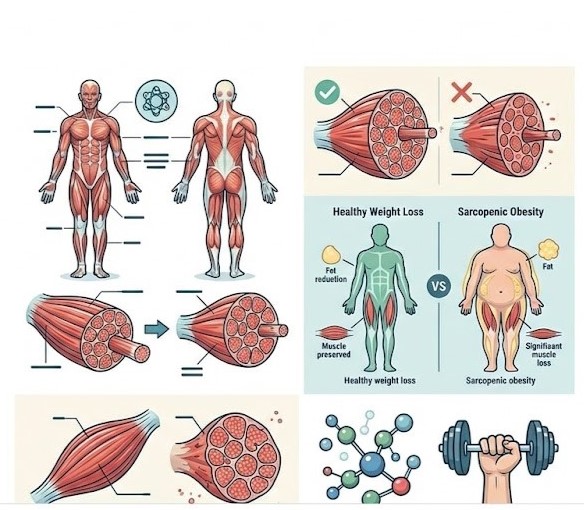
Muscle loss (sarcopenia) risk. Significant weight loss at any age can result in loss of muscle mass alongside fat loss. This is particularly concerning for older adults, who are already at risk of sarcopenia. Studies show that people on GLP-1 drugs can lose 25–40% of their weight loss as lean muscle mass. Experts strongly recommend combining semaglutide with resistance training and adequate protein intake to protect muscle mass.
Bone density concerns. Rapid weight loss can reduce bone density — a significant risk for older adults already prone to osteoporosis. Bone health monitoring and adequate calcium and vitamin D intake are important for older adults on these medications.
Gastrointestinal side effects. Nausea, vomiting, and diarrhea are the most common side effects. While these are usually manageable and tend to diminish over time, they can be more disruptive for older adults and may contribute to dehydration or nutritional deficiencies.
Drug interactions. Older adults typically take more medications. Semaglutide slows gastric emptying, which can affect the absorption of other drugs. A thorough medication review with a physician is essential before starting.
Nutritional adequacy. Eating significantly less can make it harder to meet nutritional needs, particularly for older adults who already face challenges with nutrient absorption. Working with a registered dietitian is highly recommended.
What This Means If You’re Over 65 and Struggling With Weight
The takeaway from this research is genuinely encouraging — but nuanced.
If you’re over 65, struggling with weight-related health issues, and haven’t found success with diet and exercise alone, semaglutide represents a legitimate, evidence-backed option worth discussing with your doctor. The weight loss outcomes are real, the cardiovascular benefits are meaningful, and the research suggests older adults can achieve results comparable to younger age groups.
But this is not a decision to make lightly or without medical guidance. The muscle loss risk alone makes physician oversight and a combined exercise strategy non-negotiable. And like all medications, it’s not right for everyone.
The best approach: treat semaglutide as 1 tool in a broader health strategy — not a standalone solution. Pair it with resistance training, adequate protein, bone health monitoring, and regular medical check-ins.
Frequently Asked Questions (FAQ)
Q: Is Ozempic safe for adults over 65? A: For most older adults without contraindications, semaglutide appears to be well-tolerated. However, older adults face specific risks — particularly muscle loss and bone density reduction — that require careful medical monitoring. Always consult a physician before starting.
Q: Does Ozempic work as well for weight loss in older adults as in younger people? A: According to the new analysis, yes — adults over 65 achieved weight loss results (12–15% body weight reduction) comparable to those seen in younger adults in clinical trials.
Q: What are the biggest risks of Ozempic for seniors specifically? A: The 3 most significant risks for older adults are muscle loss (sarcopenia), bone density reduction, and gastrointestinal side effects that can lead to dehydration or nutritional deficiencies.
Q: How can older adults protect their muscle mass while on semaglutide? A: The most important strategies are resistance training (2–3 times per week) and ensuring adequate protein intake (at least 1–1.2 grams of protein per kilogram of body weight per day).
Q: Will Medicare or insurance cover Ozempic or Wegovy for weight loss in older adults? A: Coverage varies. As of 2026, Medicare covers semaglutide (Wegovy) for weight loss under certain conditions following legislative changes. Private insurance coverage varies by plan. Check with your insurer and physician for current coverage details.
Q: How long do you need to stay on semaglutide? A: Current evidence suggests that weight regain is common after stopping the medication. Most experts view it as a long-term or indefinite treatment for chronic weight management — similar to how medications for blood pressure or cholesterol are used.
Q: Are there natural alternatives to Ozempic for older adults? A: While no natural supplement replicates semaglutide’s mechanism, a combination of regular resistance training, high-protein diet, adequate sleep, and stress management can meaningfully support weight management and metabolic health in older adults.
The Bottom Line
For decades, older adults struggling with weight and metabolic health were largely left out of the conversation about effective weight loss treatments. The new analysis on semaglutide in adults over 65 changes that.
The drug works. It produces significant weight loss. It delivers cardiovascular benefits that may be especially meaningful for older adults. And it appears to be well-tolerated by most people in this age group.
But the muscle loss risk is real, the need for medical oversight is non-negotiable, and the best outcomes come when medication is combined with resistance training, good nutrition, and regular monitoring.
If you’re over 65 and have been struggling with your weight, this research is worth a conversation with your doctor. Because the goal isn’t just to weigh less — it’s to live better, longer, and more independently. And now there’s compelling evidence that for many older adults, semaglutide can genuinely help achieve that.