
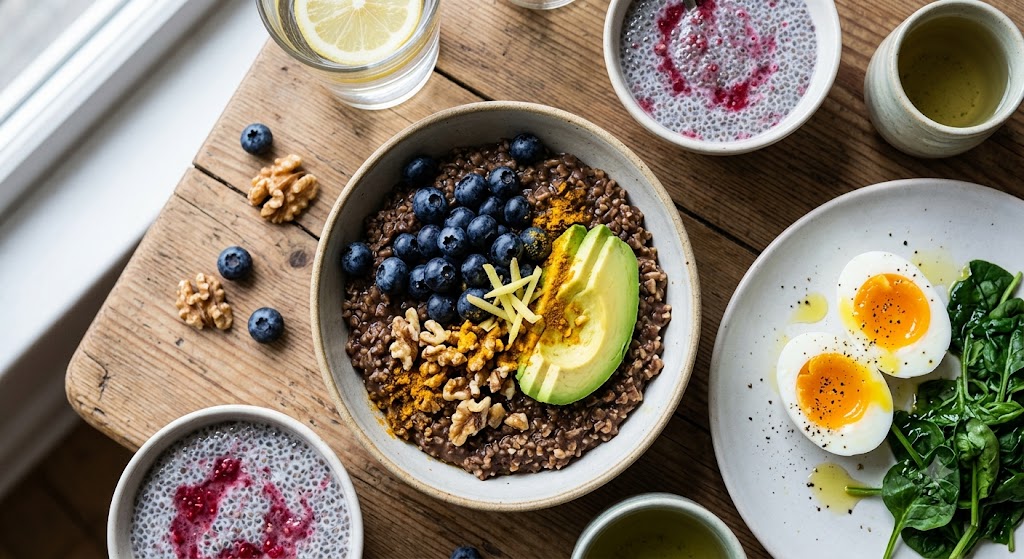
Anti-inflammatory breakfast foods are not just a wellness trend — they’re one of the most practical, evidence-supported dietary shifts you can make for long-term health. Chronic inflammation sits at the root of most of the major diseases we’re dealing with today: heart disease, type 2 diabetes, autoimmune conditions, metabolic syndrome, and certain cancers. And what you eat first thing in the morning has an outsized influence on your body’s inflammatory state for the hours that follow.
Here’s what the science says, which foods actually move the needle, and how to build a morning meal that works for your body — without turning your kitchen into a wellness experiment.
I. Why Breakfast Matters for Inflammation Specifically
The overnight fast — typically 8 to 12 hours — means your body arrives at breakfast in a state of heightened nutrient receptivity. The first meal of the day has an outsized influence on blood sugar and insulin response for the entire day. A breakfast high in refined carbohydrates and added sugars triggers a sharp glucose spike, followed by a compensatory insulin spike, followed by a crash — and each of those swings drives inflammatory signaling.
Research comparing a Mediterranean-style breakfast to a standard Western breakfast found meaningful differences in inflammatory markers afterward. The Mediterranean breakfast — centered on whole grains, olive oil, eggs, and fresh produce — resulted in significantly lower post-meal C-reactive protein (CRP), a key blood marker of systemic inflammation.
The food choices you make at breakfast also shape your appetite and food choices for the rest of the day. A breakfast that stabilizes blood sugar tends to reduce cravings for pro-inflammatory foods throughout the afternoon, while a high-sugar breakfast does the opposite.
II. The Core Principles of an Anti-Inflammatory Breakfast
Before getting into specific foods, it helps to understand what makes a food anti-inflammatory in the first place:
i. Antioxidant activity. Oxidative stress is a major driver of inflammation. Foods rich in antioxidant compounds — polyphenols, flavonoids, vitamins C and E, carotenoids — help neutralize free radicals and reduce this burden.
ii. Fiber and gut microbiome support. The gut is a central hub of immune activity. Dietary fiber feeds beneficial gut bacteria, which produce short-chain fatty acids — compounds with measurably anti-inflammatory effects that also support GABA activity and a calmer nervous system at night.
iii. Omega-3 fatty acids. The balance between omega-3 and omega-6 fatty acids in your diet influences your body’s production of pro- and anti-inflammatory signaling molecules. Foods rich in omega-3s actively counter the pro-inflammatory imbalance most modern diets create.
iv. Low glycemic load. Foods that raise blood sugar slowly and modestly produce less inflammatory signaling than those that cause sharp spikes.
v. Specific anti-inflammatory compounds. Curcumin in turmeric, gingerols in ginger, oleocanthal in olive oil, and anthocyanins in blueberries all have direct, documented anti-inflammatory properties.
III. The Best Anti-Inflammatory Breakfast Foods
1. Oats
Oats are arguably the most well-studied breakfast food for inflammation and overall health. They’re rich in beta-glucans — a type of soluble fiber with documented effects on gut health, cholesterol management, and immune modulation. A review of 31 clinical trials found that whole grains significantly reduced C-reactive protein in a meaningful proportion of participants with preexisting health conditions.
Oats also have a low glycemic index, meaning they release glucose gradually rather than spiking blood sugar. Choose plain oats (rolled, steel-cut, or quick) rather than flavored packets, which often contain significant added sugar.
2. Blueberries (and Berries Generally)
Blueberries are one of the most consistently recommended foods in anti-inflammatory nutrition research. They’re exceptionally rich in anthocyanins — the pigments responsible for their deep blue-purple color — which are among the most potent antioxidant and anti-inflammatory compounds in the plant kingdom. Research has linked regular blueberry consumption with reduced markers of oxidative stress and inflammation, improved brain function, better cardiovascular outcomes, and enhanced gut microbiome diversity.
Other berries — strawberries, raspberries, blackberries — carry similar benefits from their own antioxidant profiles. Variety is genuinely valuable here.
3. Chia Seeds
Small in size, remarkable in profile. Chia seeds are one of the richest plant-based sources of alpha-linolenic acid (ALA), an omega-3 fatty acid that helps shift the body’s inflammatory balance. A 2024 meta-analysis found that eating chia seeds significantly reduced C-reactive protein, particularly in people who are overweight or have type 2 diabetes. Effects were strongest at doses of about 35 grams per day (roughly 2.5 tablespoons) maintained for at least 12 weeks. Even smaller amounts, used consistently, provide meaningful benefit.
4. Eggs
Eggs are a source of choline, high-quality protein, lutein and zeaxanthin, and healthy fats. From an inflammation standpoint, the protein in eggs helps buffer the glycemic impact of other breakfast foods eaten alongside them. Pairing eggs with vegetables — spinach, peppers, tomatoes — multiplies the anti-inflammatory benefit significantly. Cooking method matters too: poached or soft-boiled eggs preserve more nutrients than high-heat frying, and using olive oil rather than vegetable oils improves the overall equation.
5. Walnuts
Walnuts stand apart from most other nuts because of their omega-3 fatty acid content — specifically, they’re the richest plant-based source of ALA among commonly eaten nuts. They also contain polyphenols and ellagitannins that gut bacteria convert into anti-inflammatory compounds called urolithins. Research has consistently associated regular walnut consumption with lower inflammatory markers, improved cardiovascular outcomes, and better gut health.
6. Turmeric and Ginger
These two spices contain compounds — curcumin in turmeric, gingerols and shogaols in ginger — that have been extensively studied for their anti-inflammatory properties. Both inhibit certain inflammatory signaling pathways at the cellular level. Turmeric absorbs more effectively when combined with black pepper (piperine dramatically increases curcumin bioavailability) and consumed with fat. Adding turmeric, black pepper, and a splash of olive oil to scrambled eggs or a morning smoothie is a low-effort, high-value addition.
7. Greek Yogurt
Fermented foods introduce beneficial bacteria into the gut and support the microbiome diversity associated with lower systemic inflammation. Greek yogurt that contains live and active cultures provides both substantial protein and probiotic benefit. Research has found that people who regularly eat yogurt tend to have lower levels of certain inflammatory markers. Choose plain, unsweetened versions — the added sugar in flavored yogurts partially undermines the benefit.
8. Avocado
Avocados are rich in monounsaturated fatty acids (particularly oleic acid), fiber, potassium, magnesium, vitamin E, and carotenoids. This combination helps reduce inflammation, support heart health, and keep blood sugar stable after meals. Avocado on whole grain toast — particularly when paired with eggs — is a legitimately solid anti-inflammatory breakfast combination.
IV. What to Avoid at Breakfast
Equally important is knowing what to limit:
- Sweetened cereals — often high in added sugar and refined grains, with low fiber content
- Flavored yogurts — can contain as much sugar as a dessert
- Pastries, white toast, and bagels — refined carbohydrates with minimal fiber
- Processed breakfast meats — sausages, bacon, and deli meats contain nitrates, high sodium, and saturated fat associated with elevated inflammation
- Sugary coffee drinks — a caramel latte from a chain restaurant can contain 40+ grams of sugar before the day has even started
V. A Simple Anti-Inflammatory Breakfast Template
You don’t need to overhaul your entire morning. Even one or two strategic swaps can shift the inflammatory impact of your breakfast meaningfully. Here’s a simple template:
Base: Oats or whole grain toast / Greek yogurt or eggs
Fruit: Blueberries, strawberries, or other fresh or frozen berries
Healthy fat: Walnuts, chia seeds, avocado, or olive oil
Protein: Eggs, yogurt, or nuts and seeds
Spice: Turmeric + black pepper, or fresh ginger
A bowl of oatmeal with frozen blueberries, a tablespoon of chia seeds, a handful of walnuts, and a pinch of turmeric takes about 5 minutes to prepare and covers virtually every anti-inflammatory principle in this article.
An alternative: two eggs scrambled in olive oil with spinach and roasted tomatoes, half an avocado, and a piece of whole grain toast. Just as quick, just as effective.
VI. The Bigger Picture
Anti-inflammatory eating is not a short-term protocol — it’s a direction. You’re not trying to eat perfectly every day; you’re gradually shifting the daily average of your diet toward foods that reduce the inflammatory load on your body over time. And it works best when paired with other daily habits — managing stress, moving regularly, and even supporting your vagus nerve — all of which compound together over weeks and months. Breakfast is one of the most consistent, most controllable meals in most people’s days. That makes it a high-leverage place to start.
Pick two or three of these anti-inflammatory breakfast foods that you don’t currently eat regularly. Add them in over the next two weeks. Then add more. That’s it. That’s the approach that actually works.
This article is intended for general informational and educational purposes. It is not a substitute for professional nutritional or medical advice.