If you’ve been searching for how to improve vagus nerve tone naturally, you’re probably already sensing that something in your body’s stress response isn’t quite working the way it should. Maybe you’re stuck in a low-level state of anxiety. Maybe your digestion is unpredictable. Maybe you sleep for seven hours and still wake up exhausted. The vagus nerve — the longest cranial nerve in the human body — sits quietly at the center of all of it, and most people have never heard of it.
Here’s what it does, why low vagal tone matters more than you might think, and exactly how to start improving it.
I. What Is the Vagus Nerve, Exactly?
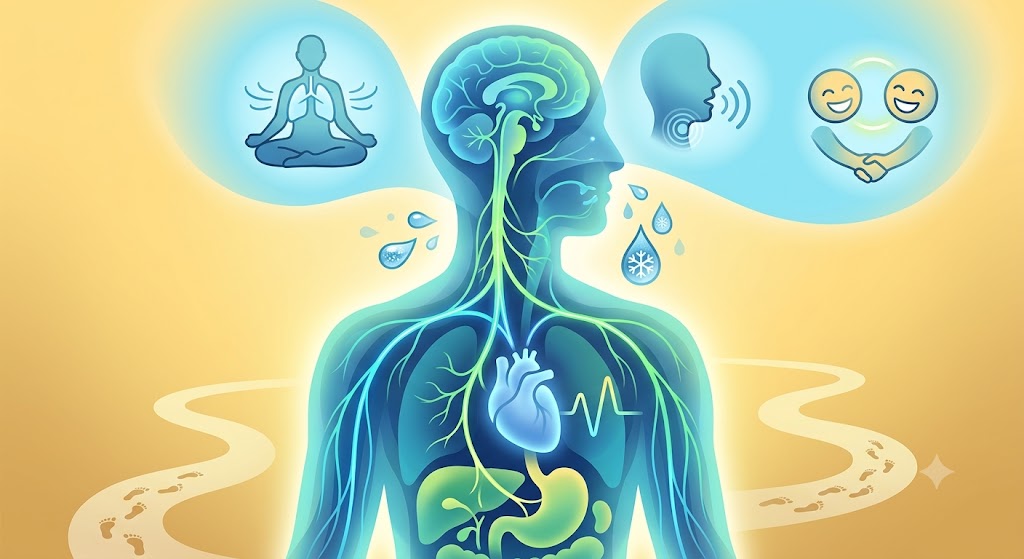
The vagus nerve starts at the base of your brainstem and travels all the way down through your neck and chest, branching out to connect with your heart, lungs, stomach, liver, kidneys, and intestines. Think of it as a two-way communication highway — about 80% of the signals actually travel upward from your organs to your brain, not the other way around.
It’s the core of the parasympathetic nervous system, often called the “rest and digest” system. This is the opposite of the fight-or-flight mode most of us live in far too often. When your vagus nerve is working well, you can shift between stress and calm with ease. When it’s not, you get stuck in a state of chronic activation — high cortisol, poor digestion, shallow breathing, disrupted sleep, and low-grade inflammation.
What Is Vagal Tone?
Just like your muscles, your vagus nerve can be strong or weak depending on how much you use and stimulate it. “Vagal tone” refers to how well your vagus nerve is functioning. High vagal tone means your nervous system is resilient — it responds to stress appropriately and bounces back quickly. Low vagal tone means your system stays activated longer, recovery is slow, and the downstream effects show up in almost every system in your body.
Low vagal tone has been linked to poor digestion, sluggish metabolism, chronic inflammation, hormone imbalances, anxiety, depression, and even autoimmune conditions. And here’s the uncomfortable truth: between the ages of 35 and 40, vagal tone naturally declines unless you’re actively working to support it.
II. Signs Your Vagal Tone May Be Low
Before diving into the how, it’s worth recognizing the what. Here are some common signs that your vagus nerve may not be functioning optimally:
- I. Chronic digestive issues — bloating, constipation, or unpredictable bowel movements
- II. Feeling anxious or on edge without a clear reason
- III. Difficulty winding down at night, even when you’re tired
- IV. Brain fog or difficulty concentrating
- V. Frequent illnesses or slow recovery from infection
- VI. Heart rate that feels irregular or races with minimal exertion
- VII. A tendency to stay stuck in stress rather than bouncing back
If several of these feel familiar, you’re not alone. Modern life — with its constant notifications, poor sleep, ultra-processed food, and sedentary habits — is essentially a recipe for low vagal tone.
III. The Science Behind Vagus Nerve Stimulation

Here’s what makes vagal tone so important: the vagus nerve acts as your body’s built-in anti-inflammatory system. When it’s functioning well, it sends signals that help regulate immune response, reduce inflammation, lower heart rate, and promote healing. When it’s underactive, those protective signals weaken — and chronic inflammation can quietly take hold over months and years.
Research on vagus nerve stimulation (VNS) has been growing steadily. Clinical devices that electrically stimulate the vagus nerve have been approved for conditions like epilepsy and treatment-resistant depression. But the exciting news for the rest of us is that there are natural, low-tech ways to stimulate this nerve every single day — and the evidence supporting them is solid.
Heart rate variability (HRV) is one of the best proxies for vagal tone. The more variable your heart rate is from beat to beat (in a healthy, controlled way), the higher your vagal tone tends to be. If you use a fitness tracker that measures HRV, you’re already keeping an eye on one of the most meaningful wellness metrics available.
IV. 7 Practical Ways to Improve Your Vagal Tone Naturally
1. Deep Diaphragmatic Breathing
This is the most accessible, most evidence-backed vagal stimulation technique available. When you breathe slowly and deeply — especially making your exhale longer than your inhale — you activate the parasympathetic nervous system and directly stimulate the vagus nerve.
Try this: inhale for 4 counts, exhale for 6 to 8 counts. Do this for 5 to 10 minutes before meals, before bed, or any time you feel stress rising. The extended exhale is the key. It’s during the exhale that your heart rate slows and vagal activity increases.
Box breathing (inhale for 4, hold for 4, exhale for 4, hold for 4) and the 4-7-8 technique are both excellent options as well. The specific method matters less than the consistency.
2. Humming, Singing, or Chanting
This sounds almost too simple, but the vagus nerve runs right alongside the muscles in your throat. Humming, chanting, or singing creates vibrations in that area that directly stimulate the nerve. The louder and more resonant, the better.
You don’t need to be a singer. Hum in the shower. Sing along to something in the car. Chant a syllable like “om” for a few minutes. These habits may feel a little silly at first, but the physiological effect is real.
3. Gargling with Water
Another throat-based technique — vigorous gargling activates the same muscles that the vagus nerve is connected to. Gargling with water for 30 to 60 seconds, ideally until your eyes water slightly, can stimulate vagal activity. Do this once or twice a day, and treat it less like a dental hygiene task and more like a wellness practice.
4. Cold Water Exposure
Splashing cold water on your face, ending a shower with 30 to 60 seconds of cool water, or doing brief cold plunges all stimulate the vagus nerve through what’s called the diving reflex — a parasympathetic response your body activates when it detects cold water, especially on the face. This causes a rapid drop in heart rate and a surge in vagal activity. Cold exposure isn’t comfortable, but it’s remarkably effective.
Even just rinsing your face with cold water in the morning can give you a measurable boost. Start there if a full cold shower sounds like a hard sell.
5. Physical Movement, Especially Walking
Exercise in general supports vagal tone, but aerobic movement like walking is particularly well-suited. It promotes cardiovascular health, lowers baseline stress hormones, and supports the kind of HRV improvements that reflect stronger vagal tone over time.
Regular walkers tend to have higher HRV scores than sedentary individuals. Even 20 to 30 minutes a day makes a difference. The goal isn’t intensity — it’s consistency.
6. Social Connection and Laughter
This one often gets overlooked in wellness discussions, but genuine social interaction and laughter are among the most powerful activators of the parasympathetic nervous system. Positive social bonds release oxytocin, which is directly linked to improved vagal tone. Laughter triggers deep exhalations, which — as we covered above — are fundamentally vagal in nature.
This is one of the reasons loneliness has such a profound impact on physical health. It’s not just psychological — chronic isolation is associated with measurably lower vagal tone.
7. Mindfulness and Meditation
Consistent mindfulness practice — even 10 minutes a day — has been shown to increase HRV over time. Body-scan meditations, yoga nidra, and somatic practices all help shift the nervous system toward a parasympathetic state. The benefit isn’t just in the moment; regular practitioners show structural improvements in vagal function that persist throughout the day.
V. Building a Daily Vagal Toning Routine
You don’t have to do all of this at once. In fact, trying to add 7 new habits simultaneously is a reliable way to do none of them. Instead, anchor a few of these practices into your existing routines:
- Morning: Splash cold water on your face after waking. Take 5 deep breaths before your first coffee.
- Mid-morning: Go for a 20-minute walk outside without earbuds in. Let your body be present.
- Before meals: Take 3 to 5 slow, deep belly breaths. This alone can meaningfully improve digestion by priming the vagus nerve before eating.
- Evening: Gargle after brushing your teeth. Hum quietly while you wind down. No phone an hour before bed. If sleep is still elusive even after your nervous system has calmed down, read our guide on magnesium glycinate for sleep — it pairs well with these habits.
These practices are small, but cumulative. Vagal tone improves with repetition over weeks and months — just like physical fitness. The nervous system is trainable. You just have to show up.
VI. A Final Word
For too long, wellness conversations have focused almost entirely on what you eat and how hard you exercise. The vagus nerve flips that conversation on its head. It suggests that how well your nervous system is functioning may be the missing piece for millions of people who are doing all the “right” things and still not feeling well.
The good news is that learning how to improve vagus nerve tone naturally doesn’t require expensive equipment, a gym membership, or a complicated protocol. It requires breathing a little more deliberately, moving your body, singing in the shower, and maybe ending your morning routine with a quick blast of cold water.
Start with one. Then add another. Your nervous system will notice.
Always consult a qualified healthcare provider before making changes to your health routine, particularly if you have a diagnosed medical condition.