
If you’ve been feeling like a different version of yourself lately — more anxious, more tired, foggy in ways that feel new, sleeping badly, and wondering if something is genuinely wrong — there’s a very good chance perimenopause is part of the picture. And if you’ve been searching for perimenopause symptoms natural remedies that go beyond surface-level advice, you’re in the right place.
Here’s the thing most people don’t know: perimenopause symptoms go far beyond hot flashes. In fact, a major research study found that among women in perimenopause, exhaustion affected 95% of participants, brain fog hit 87%, anxiety showed up in 85%, and weight gain appeared in 79% — all before hot flashes even made the top of the list.
If nobody warned you about that, you’re not alone. Most women spend years wondering what’s happening to their bodies before perimenopause even enters the conversation.
This article is here to change that. We’ll cover what perimenopause actually is, the symptoms most women experience but rarely connect to hormones, and the natural remedies that are backed by real science — not just wellness marketing.
I. What Is Perimenopause — And When Does It Start?
Perimenopause is the transitional phase leading up to menopause — the period when your ovaries gradually begin producing less estrogen and progesterone. It’s not a sudden switch. It’s a gradual, often unpredictable hormonal shift that can last anywhere from 4 to 10 years.
Most women enter perimenopause somewhere in their mid-to-late 40s, but it can begin as early as the mid-30s. You’re officially in menopause only after 12 consecutive months without a period — everything before that point is perimenopause.
What makes this phase particularly tricky is that hormone levels don’t decline smoothly. They fluctuate wildly — spiking and dropping in ways that can feel completely random. One week you feel fine. The next, you’re waking at 3 AM drenched in sweat, snapping at people you love, and forgetting words mid-sentence. Your body is constantly trying to adapt to a moving target, and that adaptation process is what creates so many of the symptoms.
The official marker is changes to your menstrual cycle — periods becoming irregular, heavier, lighter, or more widely spaced. But the hormonal changes that drive symptoms often begin years before your cycle visibly shifts.
II. The Symptoms Most Women Don’t Connect to Perimenopause
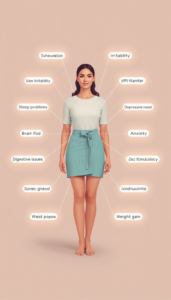
Hot flashes get all the attention. But research has confirmed that the most common perimenopause symptoms are actually the ones that are easiest to dismiss or misattribute.
Here’s what the data actually shows, ranked by how commonly they appeared in a large-scale study of perimenopausal women:
- Exhaustion — 95% of participants
- Fatigue — 93%
- Irritability — 91%
- Sleep problems — 89%
- Depressive mood — 88%
- Brain fog — 87%
- Digestive issues — 86%
- Anxiety — 85%
- Joint and muscle discomfort — 80%
- Weight gain — 79%
Most of these women weren’t connecting these experiences to their hormones. They were blaming stress, aging, burnout, or simply “being bad at sleeping.” And that misattribution matters — because the solutions are very different depending on whether you understand what’s actually driving the symptoms.
Let’s break down the big ones.
Brain Fog
Brain fog is one of the most disorienting perimenopause symptoms. It shows up as difficulty concentrating, word-finding problems, forgetting things mid-task, slower processing, and a general sense that your mental sharpness isn’t what it used to be.
The cause is real and physiological. Estrogen receptors exist throughout the brain — in areas involved in memory, mood, attention, and cognitive function. When estrogen fluctuates, those systems are affected directly. Add disrupted sleep (which is itself driven by hormonal changes) and elevated stress hormones, and you get a compounding effect on cognitive clarity.
Brain fog often peaks in late perimenopause and typically improves within 12 to 24 months after the final menstrual period, as the brain adapts to its new hormonal baseline. That’s reassuring — but it doesn’t mean you have to just suffer through it.
Sleep Disruption
Studies show that sleep disturbances affect 40% to 60% of women during perimenopause. Hot flashes and night sweats are a big driver — they fragment sleep architecture, particularly REM sleep, which is essential for memory, emotional regulation, and recovery.
But sleep disruption in perimenopause goes beyond just sweating through the night. Many women find they wake in the early hours (often around 3 AM), can’t fall back asleep, and feel profoundly unrefreshed in the morning — even on nights without obvious hot flashes.
Chronically poor sleep compounds almost every other perimenopause symptom. Brain fog worsens. Cortisol rises. Appetite hormones shift. Mood becomes harder to manage. It’s a cycle that feeds itself.
Anxiety
New or worsening anxiety is one of the most common — and most overlooked — perimenopause symptoms. Many women who have never experienced significant anxiety find themselves suddenly dealing with racing thoughts, a sense of dread, heightened reactivity, or a free-floating nervousness that has no clear cause.
This is directly hormone-driven. Estrogen influences the production and regulation of serotonin, dopamine, and GABA — the neurotransmitters most involved in mood stability and anxiety. As estrogen fluctuates, so do these systems.
This is also why perimenopause anxiety often feels different from life stress anxiety. It can arrive out of nowhere, seemingly disconnected from external circumstances. Understanding that it has a physiological root makes it far less frightening — and far easier to address.
Weight Changes and Belly Fat
Many women notice that weight starts accumulating around the midsection during perimenopause — even without major changes to diet or exercise. This isn’t imagined.
Shifting estrogen levels affect fat distribution, pushing more fat toward the abdomen. At the same time, declining estrogen and rising cortisol (from disrupted sleep and chronic stress) increase insulin resistance, making it easier to store fat and harder to lose it. This connects directly to what we’ve covered in our piece on cortisol and belly fat — the hormonal stress response and the hormonal changes of perimenopause overlap in ways that directly affect body composition.
Joint Pain and Muscle Aches
Estrogen has anti-inflammatory properties throughout the body — including in joints and connective tissue. As estrogen declines, many women notice new joint aches, morning stiffness, and muscle soreness that wasn’t there before. This is often diagnosed as “just getting older” but is frequently driven by the hormonal shift of perimenopause.
III. The Gut-Hormone Connection Most People Miss
Here’s something that often surprises people: your gut health directly affects how your body processes hormones during perimenopause.
The gut microbiome contains a collection of bacteria collectively called the estrobolome — a subset of gut bacteria specifically responsible for metabolizing and recycling estrogen. When the gut microbiome is healthy and diverse, this process runs smoothly. When it’s disrupted, estrogen metabolism becomes imbalanced, worsening hormonal symptoms.
This is why digestive issues appear on the perimenopause symptom list at 86%. The gut-hormone connection runs in both directions — hormonal changes affect the gut, and gut health affects hormone balance. We explored this connection in depth in our article on gut bacteria and serotonin, and it’s just as relevant here.
Supporting gut health through diet, fermented foods, and prebiotics during perimenopause isn’t just good for digestion. It’s a direct lever on hormone balance.
IV. 7 Natural Remedies for Perimenopause Symptoms That Are Backed by Science
These aren’t quick fixes. They’re lifestyle and nutritional strategies with real evidence behind them — the kind that add up to meaningful relief when applied consistently over weeks and months.
1. Prioritize Magnesium — Especially for Sleep and Mood
Magnesium is probably the most underutilized supplement in perimenopause care. It plays a direct role in regulating cortisol, supporting GABA (the brain’s calming neurotransmitter), reducing hot flash frequency, and improving sleep quality.
The form matters. Magnesium bisglycinate (also called magnesium glycinate) is the most bioavailable and gentlest form on the gut. Taking 300 to 400 mg before bed has been shown to improve sleep onset, reduce anxiety, and ease muscle tension. We went deep on this in our magnesium glycinate for sleep guide — the evidence is solid.
2. Eat More Phytoestrogen-Rich Foods
Phytoestrogens are plant compounds that weakly mimic estrogen in the body. They don’t replace estrogen, but they can help take the edge off the hormonal fluctuations of perimenopause — particularly hot flashes and mood shifts.
The best food sources include:
- Flaxseeds (highest concentration — 1 to 2 tablespoons of ground flaxseed daily is a practical target)
- Edamame and organic soy products (tofu, tempeh, miso)
- Chickpeas and lentils
- Sesame seeds
Studies on soy isoflavones specifically have shown modest but consistent reductions in hot flash frequency and severity when consumed regularly over several weeks.
3. Strength Training — Not Just Cardio
If you’re doing cardio for perimenopause, that’s great. But strength training is where the real hormonal benefit lies.
Resistance training helps counteract the muscle loss (sarcopenia) that accelerates with estrogen decline. It also improves insulin sensitivity, reduces abdominal fat, supports bone density (a major concern post-menopause), and has been shown to improve mood and sleep quality. Even 2 to 3 sessions per week of moderate resistance training produces measurable benefits.
The hormonal shift of perimenopause makes this non-negotiable for long-term health. Cardio keeps your heart strong — but muscle is what keeps your metabolism, your bones, and your cognitive function intact as hormones shift.
4. Regulate Your Nervous System Daily
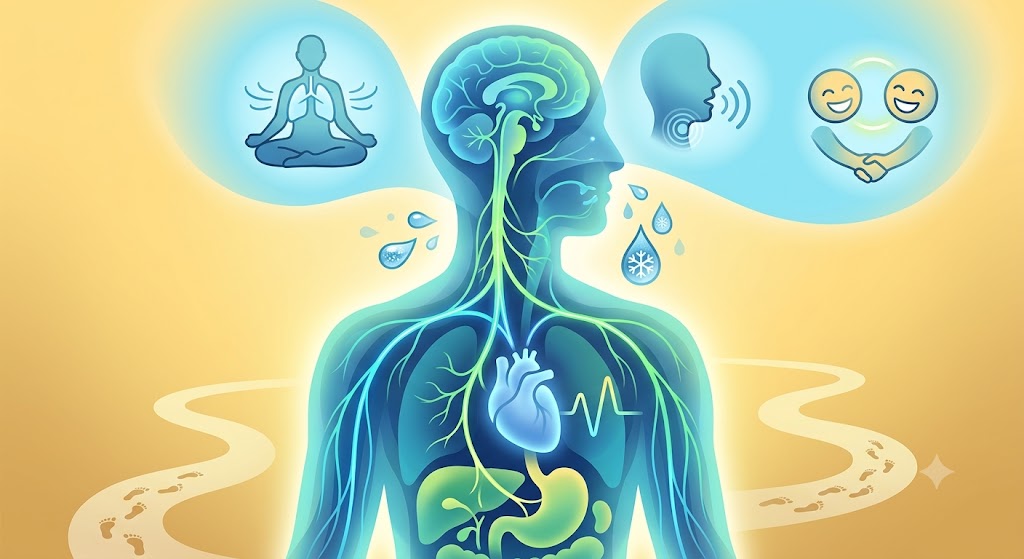
Because perimenopause anxiety and mood disruption are rooted in nervous system dysregulation — not just “stress” — practices that directly calm the nervous system have an outsized impact during this phase.
This is where somatic exercises for beginners become genuinely relevant. Slow, intentional body-based practices help downregulate the sympathetic nervous system and activate the parasympathetic (rest-and-restore) state. Combined with breathwork and mindfulness, these practices directly reduce cortisol and improve the hormonal environment.
Similarly, supporting your vagus nerve — the main highway of your parasympathetic nervous system — is one of the most effective ways to manage perimenopausal anxiety and sleep disruption. Our guide on improving vagus nerve tone naturally covers exactly how to do this.
5. Anti-Inflammatory Nutrition
Estrogen has natural anti-inflammatory effects throughout the body. As it declines, inflammation can rise — worsening joint pain, brain fog, fatigue, and mood disruption.
An anti-inflammatory dietary approach includes:
- Omega-3 fatty acids from fatty fish (salmon, sardines), walnuts, and flaxseeds
- Colorful vegetables and fruits rich in polyphenols
- Olive oil as the primary cooking fat
- Reducing processed foods, refined sugars, and alcohol (all pro-inflammatory)
- Turmeric with black pepper for curcumin’s anti-inflammatory effects
Reducing alcohol specifically is worth emphasizing. Many perimenopausal women find that alcohol tolerance drops significantly during this phase — even 1 to 2 drinks can worsen hot flashes, disrupt sleep, and amplify anxiety the following day.
6. Black Cohosh for Hot Flashes
Black cohosh (Actaea racemosa) is the most studied herbal supplement for perimenopausal hot flashes. Multiple clinical trials have shown it can reduce hot flash frequency and intensity with consistent use over 8 to 12 weeks.
It doesn’t work like estrogen — it appears to act on serotonin receptors and the central nervous system to modulate the temperature-regulating mechanisms that go haywire during perimenopause. It’s generally well-tolerated, though it’s not appropriate for women with liver conditions or those on certain medications.
A standardized extract at 20 to 40 mg per day is the typical evidence-based dose. As always, check with your healthcare provider before starting any new supplement.
7. Sleep as a Non-Negotiable Priority
Sleep is the single most powerful lever in perimenopause management — and the most commonly sacrificed.
When sleep is chronically disrupted, cortisol rises, hunger hormones shift, cognitive function declines, mood stability erodes, and every other perimenopause symptom gets worse. There is no supplement, herb, or lifestyle practice that can compensate for consistently poor sleep.
Practical sleep strategies that work especially well during perimenopause:
- Keep the bedroom genuinely cool (between 16 and 19°C / 60 and 67°F)
- Cut caffeine off by noon — hormonal shifts make many women more caffeine-sensitive
- Avoid alcohol within 3 hours of bedtime
- Establish a consistent wind-down routine — the nervous system regulation practices above are particularly useful here
- Consider magnesium glycinate 30 to 60 minutes before bed (see point 1)
V. When to Talk to Your Doctor
Natural remedies work well for mild to moderate perimenopause symptoms. But there are situations where medical guidance is genuinely warranted and important:
- Hot flashes and night sweats are severe enough to significantly disrupt daily functioning or sleep
- Depressive mood or anxiety is persistent and debilitating
- Periods are becoming very heavy or irregular in ways that feel alarming
- You’re noticing significant cognitive changes that feel sudden or severe
- Natural approaches have been consistently applied for 2 to 3 months without improvement
Hormone Replacement Therapy (HRT) has been significantly rehabilitated by recent research, and for many women it’s a highly effective and medically appropriate option. It’s not right for everyone, but it deserves a real conversation with your provider rather than a reflexive dismissal.
Non-hormonal prescription options also exist for specific symptoms like hot flashes and mood disruption. The point is: you don’t have to white-knuckle through perimenopause. Both natural and medical options are available, and the best approach is often a thoughtful combination of both.
VI. What Perimenopause Is Really Asking of You
Here’s a reframe that can change how you relate to this whole experience: perimenopause isn’t your body breaking down. It’s your body reorganizing.
The hormonal shift of perimenopause is asking you to pay closer attention to sleep, to stress, to what you eat, to how you move, and to how you regulate your nervous system. The symptoms are uncomfortable — genuinely — but they’re also information. They’re your body signaling which systems need more support.
Women who come through perimenopause with the least disruption are almost universally the ones who used this phase as a prompt to invest in their foundational health habits — not out of fear, but out of genuine self-care.
That’s not a small thing. That’s actually an opportunity.
The Bottom Line
Perimenopause symptoms are real, they go far beyond hot flashes, and they’re driven by real physiological changes in your hormonal and nervous systems. You’re not imagining it. You’re not just stressed. And you’re absolutely not alone.
The natural remedies that work best — magnesium, phytoestrogen-rich foods, strength training, nervous system regulation, anti-inflammatory nutrition, quality sleep, and targeted herbs — aren’t glamorous. But they’re consistent, evidence-backed, and cumulative. Start with 1 or 2, build from there, and give each approach at least 4 to 6 weeks before evaluating.
Your body is doing something it was designed to do. Give it the right conditions, and it will find its new balance.
“For a complete collection of women’s health and wellness guides, check out our health and wellness books bundle guide.”
For more on the hormonal-stress connection, read our deep dive on cortisol and belly fat. And if sleep is your biggest struggle right now, the magnesium glycinate for sleep guide is the best place to start.