
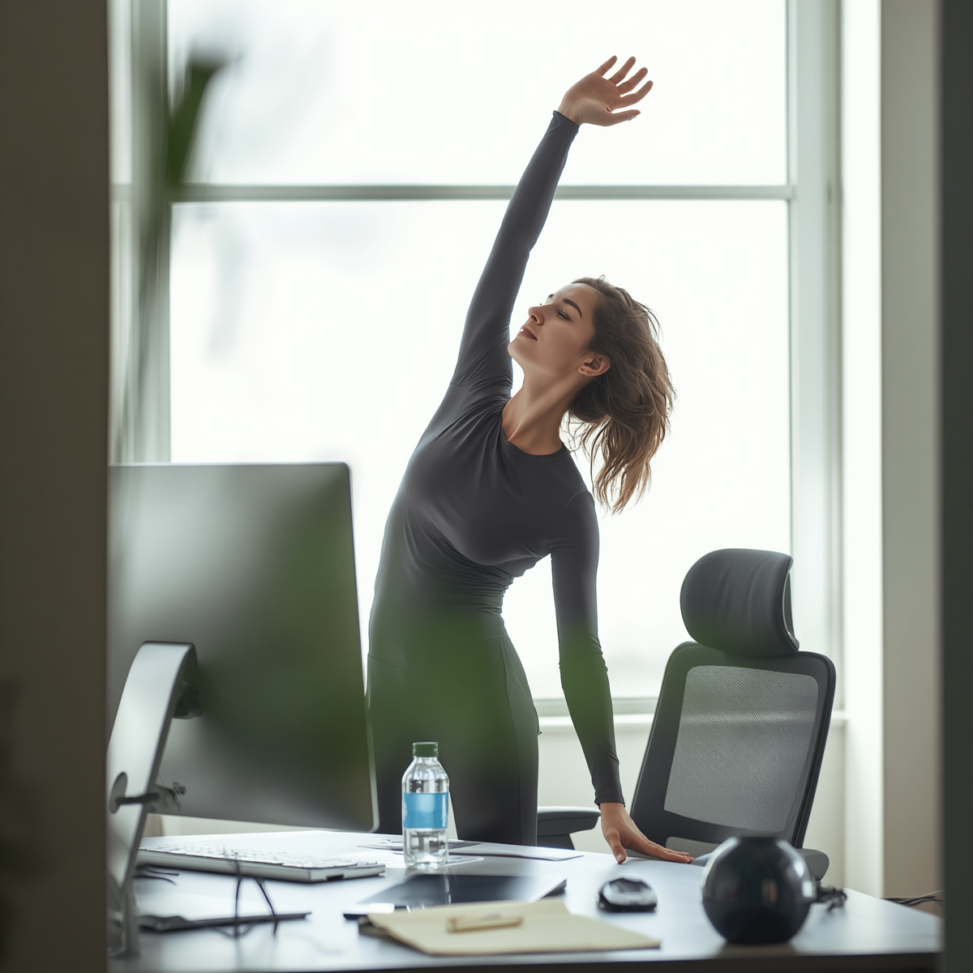
The effects of sitting all day creep up quietly. You don’t notice them in the moment — you notice them when you stand up after a long meeting and your hips feel locked, or when you reach for something on a high shelf and your shoulder protests, or when a dull ache settles into your lower back by 3pm without any single obvious cause.
If you spend most of your working hours at a desk, this isn’t a personal failing or a sign you’re out of shape. It’s a predictable, well-documented physical pattern — and the good news is it’s also a genuinely fixable one, with specific, targeted approaches rather than vague “move more” advice.
💺 Feeling it in your back and hips?
A lumbar support belt or a properly contoured pillow can take a lot of the daily strain off while you rebuild better habits. We like the VitaNorth Lumbar Decompression Traction Belt for lower back relief, or the Butterfly Memory Foam Pillow if neck and shoulder tension is your main issue.
See more picks in our 10 Wellness Products for Self-Care roundup.
What Actually Happens to Your Body When You Sit All Day
Prolonged sitting doesn’t just mean “less exercise.” It actively creates specific muscular and postural changes through repeated, sustained positioning.
Your hip flexors shorten. Sitting holds your hips in a flexed position for hours at a time. Over months and years, this causes the hip flexor muscles to adaptively shorten, which can contribute to lower back pain and reduced hip mobility even when you’re not sitting.
Your glutes weaken and “switch off.” A phenomenon sometimes called “gluteal amnesia” occurs when your glute muscles — meant to be your primary hip and posture stabilizers — become underused and less neurologically active from constant sitting. This forces other muscles, particularly in your lower back, to compensate, often leading to chronic tension and pain there instead.
Your upper back rounds and shoulders pull forward. Hours spent reaching toward a keyboard and looking at a screen encourages a forward head position and rounded upper back — sometimes informally called “tech neck” or “upper crossed syndrome.” This pattern strains the neck and upper back muscles that are working overtime to hold your head up against gravity in a less efficient position.
Your core engagement drops significantly. A supportive chair does a lot of the stabilizing work your core muscles would otherwise be doing, which over time can mean reduced core strength and engagement even during other activities.
None of this happens because you’re doing anything “wrong” — it’s simply what sustained, repeated positioning does to the body over time, regardless of how fit or active you are outside of work hours.
Why “I Exercise After Work” Doesn’t Fully Cancel It Out
This is one of the most important and most counterintuitive things to understand: a solid workout in the evening doesn’t fully undo 8+ hours of sitting, even if it builds general fitness and strength.
Research on prolonged sitting suggests that the specific postural and muscular adaptations from sustained sitting — particularly hip flexor tightness and glute deactivation — are driven by sustained positioning, not simply a lack of overall activity. This means someone who exercises intensely for an hour but sits the other 8-10 hours of their day can still experience these specific patterns, because the issue isn’t total movement volume — it’s prolonged, unbroken static positioning.
The practical implication: breaking up sitting time throughout the day matters as much as, or more than, the intensity of a single workout session.
6 Targeted Fixes for the Desk Job Body

1. Hip Flexor Stretch (Daily)
A simple kneeling lunge stretch — one knee on the ground, the other foot planted in front at a 90-degree angle, gently shifting your weight forward until you feel a stretch in the front of the hip of the kneeling leg — directly counteracts the shortening that sitting causes. Hold for 30 to 45 seconds per side, ideally daily, especially if you sit for most of your working hours.
2. Glute Bridges (To Reactivate Weakened Glutes)
Lying on your back, knees bent, feet flat on the floor, lift your hips toward the ceiling by squeezing your glutes, then lower with control. This directly re-engages the glute muscles that sitting deactivates. 2 to 3 sets of 12 to 15 repetitions, a few times a week, makes a real difference over time.
3. Wall Angels (For Rounded Shoulders and Upper Back)
Standing with your back against a wall, arms raised to a goalpost position against the wall, slowly slide your arms up and down while keeping contact with the wall as much as possible. This actively works the muscles between your shoulder blades that become weak and overstretched from a forward-rounded posture. 2 sets of 10 to 15 repetitions, several times a week.
4. The Hourly Movement Break (The Single Most Important Habit)
If you take away only one strategy from this article, make it this one: stand up and move for even 2 to 3 minutes every hour. Set a recurring alarm if you need to — most people drastically underestimate how long they’ve been sitting once they’re absorbed in work.
This doesn’t need to be a formal exercise break. Walking to refill water, doing a few bodyweight squats, or simply standing while taking a phone call all count. The key variable is interrupting the sustained positioning regularly, not the intensity of what you do during the break. Brief movement throughout the day also has a real effect on stress and mental clarity — our guide on managing stress and anxiety touches on exactly why short bouts of movement matter beyond just the physical benefits.
5. Adjust Your Workspace Setup
A few specific, often-overlooked adjustments make a meaningful difference: your screen should be at eye level to reduce forward head posture, your chair should support your lower back’s natural curve rather than encouraging slumping, and your feet should rest flat on the floor or a footrest rather than dangling, which affects pelvic positioning.
If a standing desk is available or feasible, alternating between sitting and standing throughout the day — rather than standing continuously, which has its own fatigue issues — tends to work better than committing fully to either position.
6. Core Activation Throughout the Day
Rather than relying solely on a dedicated core workout, periodically engaging your core muscles while seated — a gentle, sustained brace for 10 to 15 seconds, a few times throughout the day — helps maintain some of the activation that sitting otherwise reduces, without requiring you to leave your desk.
Building a Realistic Routine, Not an Overwhelming One
You don’t need to do all 6 of these every single day to see real improvement. A genuinely sustainable starting approach:
- Daily: The hourly movement break — this is the highest-leverage habit on the list
- 3 to 4 times a week: Hip flexor stretch and glute bridges
- 2 to 3 times a week: Wall angels
- Ongoing: Workspace adjustments (one-time setup, then maintained)
Consistency over time matters significantly more than intensity in any single session. Someone who does a brief hip flexor stretch daily for 3 months will likely see more meaningful change than someone who does an intense, comprehensive routine once and then stops. If low energy throughout the workday is part of what you’re dealing with alongside the physical tightness, our piece on why you’re always tired covers the other common culprits worth ruling out.
If you’re looking to build more general movement into your day beyond these targeted fixes, our Japanese walking method guide pairs well with this — it’s specifically designed to fit into busy schedules without requiring a dedicated gym session.
When to See a Physical Therapist or Doctor
Most desk-related tightness and discomfort responds well to consistent self-directed strategies like the ones above. It’s worth seeing a physical therapist or doctor if:
- Pain is sharp, persistent, or worsening rather than a general tightness or ache
- Pain radiates down a leg or arm, which can indicate nerve involvement rather than simple muscular tightness
- Symptoms significantly limit your daily function or don’t improve after several weeks of consistent effort with targeted stretches and movement
- You’re experiencing numbness or tingling alongside the discomfort
A physical therapist can also provide a personalized assessment if generic strategies aren’t fully addressing your specific pattern of tightness or weakness.
Frequently Asked Questions
How long does it take to see improvement from these exercises? Many people notice reduced tightness and discomfort within 2 to 3 weeks of consistent practice, particularly with the hourly movement break and hip flexor stretching. More significant postural changes, like correcting rounded shoulders, typically take longer — often 2 to 3 months of consistent effort.
Is a standing desk alone enough to fix the effects of sitting all day? Not entirely. Standing continuously for long periods creates its own fatigue and postural issues. Alternating between sitting and standing throughout the day, combined with regular movement breaks, tends to be more effective than relying on a standing desk alone.
Can I undo years of sitting damage, or is some of it permanent? Most of the muscular and postural adaptations from prolonged sitting — tight hip flexors, weak glutes, rounded shoulders — are genuinely reversible with consistent, targeted effort. Significant structural changes are rare from sitting alone; most of what people experience is muscular tightness and imbalance, which responds well to the strategies outlined here.
Do I need special equipment to do these exercises? No — all 6 strategies covered here require no equipment and can be done in a small amount of space, making them realistic to fit into a workday without needing a gym or dedicated workout time.
This article is for informational purposes only and does not constitute medical advice. If you’re experiencing significant or persistent pain, please consult a physical therapist or doctor for a personalized assessment.